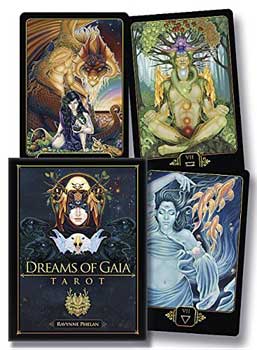
Dreams of Gaia Tarot (Deck & Book) by Ravynne Phelan
$41.75
A tarot of seeking, feeling, growing and healing
A tarot with major and minor arcana reworked with new archetypes and symbols, with a 136-page guidebook.
Quick uses
- Readings: use as a roadmap for the life path.
- Inner work: draw cards to see what holds you back.
- Timing: read when to act and when to be still.
How to Use It
Divination & Spirit Work
- The deck was created as a tarot for personal growth, keeping a major and minor arcana but with new archetypes, symbols and meanings.
- Read it as a roadmap: lay out where you stand, what is approaching and what choice opens the way.
- Use the guidebook to learn its own symbolism before mixing in meanings from older decks.
Witchcraft & Folk Magick
- Work it at the earth altar as a deck of Gaia, reading at the new and full moons.
- Draw a single card when you sense change approaching and keep it on the altar until the season turns.
Ceremonial & Occult Magick
- Use a card as a focus for pathworking and trance, entering the image as a doorway.
- Pair the major arcana with your study of the tarot’s place in the Western occult tradition.
A Simple Working
- Light a green candle and sit on the floor or the earth if you can.
- Shuffle while asking: “What is ready to grow in me?”
- Draw three cards: what to release, what to tend, what is coming.
- Read each with the guidebook.
- Write the reading in your journal and return to it at the next moon.
Pairs Well With
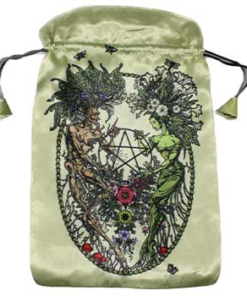
- Tarot cloth: to protect the cards during readings.
- Green and brown candles: colours of the earth.
- Moss agate or jasper: earth stones to keep with the deck.
- Tarot journal: to record spreads over time.
- Cedar incense: to cleanse the deck between readings.
What You Receive
The Dreams of Gaia Tarot by Ravynne Phelan: a full deck of cards with a 136-page guidebook.
Origin & Lore
Tarot began as a 15th-century Italian card game and was taken up by French and English occultists as a book of esoteric wisdom from the 18th century onward.
The Dreams of Gaia Tarot is the work of Australian artist Ravynne Phelan, known for her earth-centred, visionary art.
Did You Know?
Gaia is the primordial personification of the Earth in Greek myth; in Hesiod’s Theogony she is among the first beings to arise from Chaos.
Related products