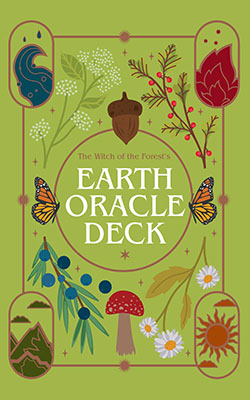

Earth Oracle Deck
$21.95
Grounding Messages from the Earth
An oracle of elemental and nature-based guidance, reached for when a practitioner needs to steady themselves and read the rhythms of the land.
Quick Uses
- Grounding draw: Pull one card with your bare feet on the ground and read it as the earth’s word for the day.
- Meditation focus: Gaze at a drawn card during a grounding meditation before ritual.
- Elemental check: Draw a card to see which element is out of balance in your life or your home.
- Ritual opening: Draw at the start of a working to set its theme.
How to Use It
Witchcraft & Folk Magick
- Read outside, on soil or stone, and leave a little water or grain as thanks when you finish.
- Lay a card beneath a potted plant or in a garden bed as the focus of a blessing on growth.
Hoodoo & Rootwork
- Draw a card before laying a foot track or burying a jar, asking the earth whether the ground is right for it.
- Read over a dish of graveyard dirt or yard dirt to ask the spirit of the place for guidance.
Demonology & Black Magick
- Use the deck to read the condition of a working space before calling on chthonic or earth-bound spirits.
- Ask a spirit of the land to answer through the cards during an offering, drawing one card at a time.
A Simple Working
- Take the deck outdoors, or set a bowl of soil on your table.
- Light a brown or green chime candle and press your palms flat on the earth.
- Breathe slowly until you feel settled, then shuffle.
- Draw three cards: what the earth asks you to release, to keep, and to plant.
- Read them in turn and note one practical step for each.
- Pour a little water onto the soil as an offering before you go back inside.
Pairs Well With
- Patchouli: an earthy scent for grounding before a reading.
- Green chime candles: a short flame for nature and growth readings.
- A brass or stone pendulum: for dowsing over soil, maps and land.
- A tarot cloth: to keep the cards clean when you read outdoors.
What You Receive
One oracle deck of cards.
Origin & Lore
Oracle decks draw on the very old practice of seeking guidance through signs, and on the fortune-telling cards that spread through Europe from the late eighteenth century. Each deck sets its own meanings rather than following a fixed system like tarot.
This one takes the natural world and its elements as its language, made for daily draws, meditation and ritual work. Reading the land itself for omens, from the flight of birds to the lie of stones, is among the oldest forms of divination known.
Did You Know?
Georgius Agricola’s mining treatise De re metallica, published in 1556, includes woodcuts of prospectors walking the hills with forked dowsing rods to find veins of ore.
| Weight | 0.9 lbs |
|---|
Related products