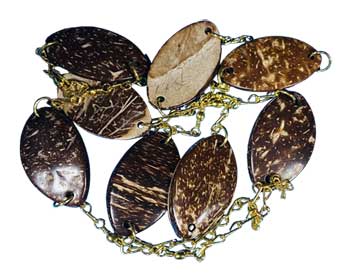
Ekuele (Coconut Divination Chain)
$31.85
The divining chain of the babalawo
A chain strung with coconut pieces, cast so each piece falls up or down, used in Ifá divination.
Quick uses
- Ifá: used by babalawos, priests of Orula, to read the odu.
- Study: handle and learn the fall of the pieces as part of Ifá study.
- Altar: keep with Orula’s items as a sacred object.
How to Use It
Lucumí & Ifá Practice
- The ekuele (opele) is thrown by a babalawo; each of its eight pieces falls face up or face down, and the pattern names one of the 256 odu of Ifá.
- It is a priest’s tool, used for quick daily consultation alongside the slower reading with ikin palm nuts.
- Students of Ifá keep one to learn the patterns and the stories attached to each odu.
Ceremonial & Occult Magick
- Students of binary divination systems study the opele beside geomancy: both build sixteen basic figures from two-way marks.
A Simple Working
- Clean your hands and the space before handling the chain.
- Lay it on a mat with the two halves side by side.
- Note how each piece lies, open or closed.
- Write the pattern down as marks of one or two lines.
- Look the pattern up in your Ifá study materials and reflect on its story.
Pairs Well With
- Ikin palm nuts: the other sacred tool of Ifá.
- Orula bowl: to house the ikin.
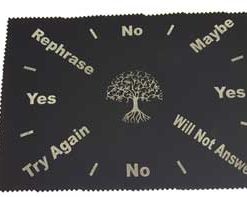
- A divination mat: a clean surface for casting.
- Cascarilla: to bless the space.
What You Receive
One ekuele divination chain made with coconut pieces.
Origin & Lore
Ifá is the divination system of the Yoruba, presided over by Orunmila (Orula), and was inscribed by UNESCO in 2008 as a Masterpiece of the Oral and Intangible Heritage of Humanity. The opele chain, called ekuele in Cuba, is the babalawo’s everyday tool.
Did You Know?
Ifá’s 16 principal figures combine into 256 odu, the same arithmetic found in Arabic and European geomancy, which uses 16 figures built from single and double marks.
Related products
Crystal Balls
$14.95
This product has multiple variants. The options may be chosen on the product page

Altar Supplies
Price range: $7.65 through $16.45
This product has multiple variants. The options may be chosen on the product page