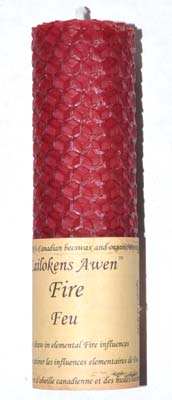
Elemental Fire Spell Candle
$10.95
For Elemental Fire and the Will
A spell candle made on the day and in the hour of the Sun or Jupiter, lit to call the drive, passion and vitality of elemental fire.
Quick Uses
- Southern Quarter: Light it in the south when calling the element of fire into your circle.
- Willpower: Burn it at the start of any goal that needs drive and staying power.
- Passion Spells: Light it to stir up desire or rekindle an old spark.
How to Use It
Witchcraft & Folk Magick
- Set it in the south of your circle when you call the guardian of fire.
- Burn it with a pinch of cinnamon to work for courage before a hard day.
Hoodoo & Rootwork
- Carve your name and a goal into it and burn it over a petition for drive and success.
- Burn it alongside a fiery oil to put heat into a stalled love or money working.
Ceremonial & Occult Magick
- Use it in rites of the salamanders, the elemental spirits of fire, as their quarter light.
- Light it in a solar hour on a Sunday to match the hour it was made and empower a talisman.
Demonology & Black Magick
- Burn it during workings with fiery spirits as the elemental light that suits their nature.
- Pass a sigil through its flame and burn the paper to release a working of force or banishment.
A Simple Working
- On a Sunday at noon, set the candle in the south of your space.
- Write one goal you want the will to achieve on a bay leaf.
- Light the candle and sprinkle a little dried cinnamon near its base.
- Hold your hands toward the flame and feel its warmth.
- State your goal three times in a firm voice.
- Burn the bay leaf in the flame and let the candle burn out.
Pairs Well With
- Bay Leaves: For writing wishes to burn in the flame.
- Cinnamon Sticks: A hot, fiery spice for drive and success.
- Carnelian: A stone of courage and fire.
- Elemental Air Candle: Air feeds fire, so the two work well side by side.
What You Receive
One 4 1/4″ elemental fire spell candle, made on the day and in the hour of either the Sun or Jupiter. Colour may vary slightly between batches.
Origin & Lore
This candle’s purpose is to call elemental fire, the classical element of heat, light, will and energy. Fire was one of the four roots of all things named by Empedocles and later woven into alchemy, astrology and ceremonial magick.
In the old system of planetary hours, the Sun rules Sunday and Jupiter rules Thursday. Both are planets of vitality, rule and good fortune, which is why fire candles are made in their hours. The elemental spirits of fire were named salamanders by the Renaissance physician and alchemist Paracelsus.
Did You Know?
Paracelsus named the spirits of fire salamanders, after the old belief that salamanders could live unharmed in flames.
Related products