


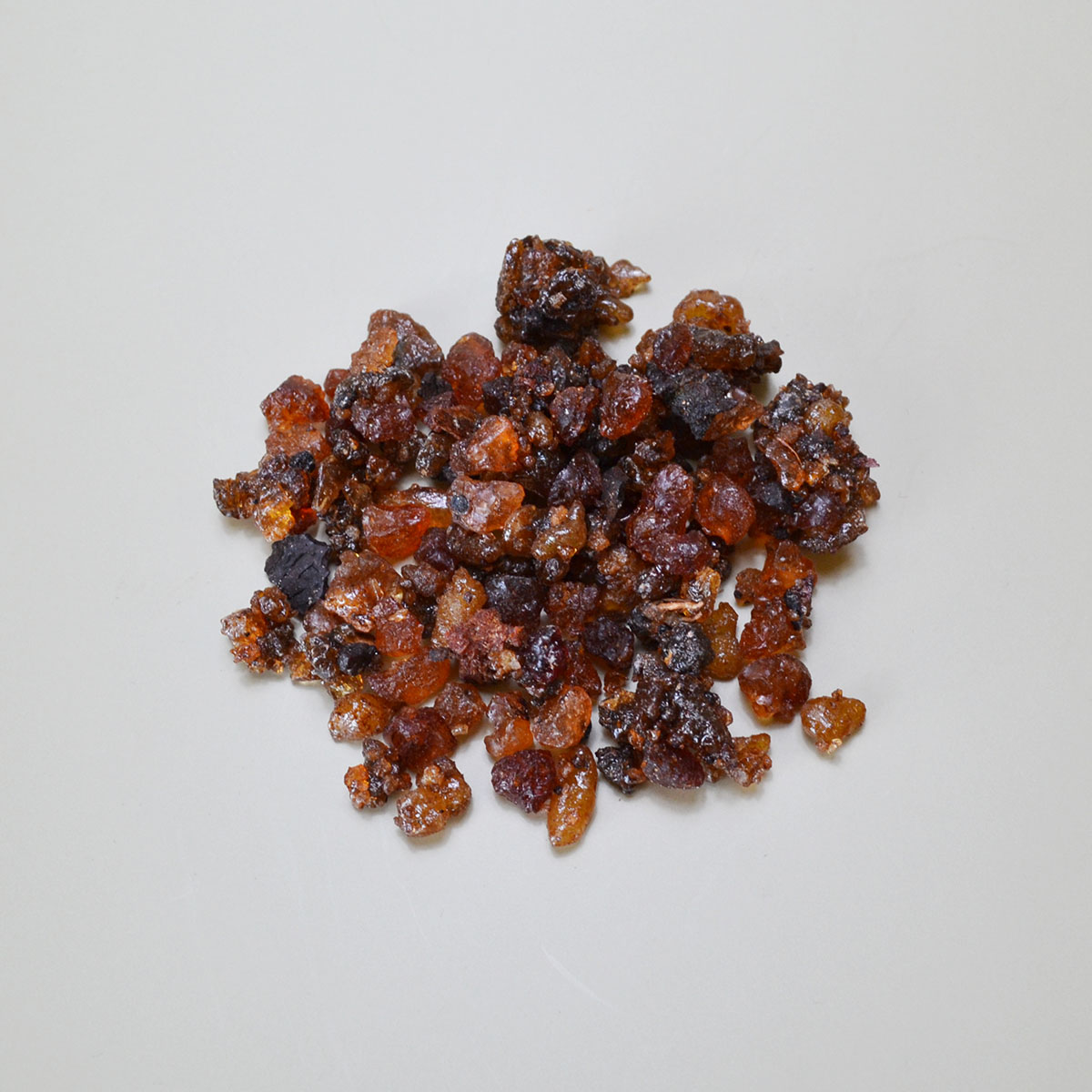


Ethiopian Myrrh granular resin
Price range: $3.25 through $43.95
An earthy myrrh for spirit work · Available in 3 sizes
Granular Ethiopian myrrh with a deep, earthy, bittersweet scent, burned for spirit work, consecration and contact with the dead.
Quick Uses
- Ancestors: burn a few grains on the ancestor altar.
- Meditation: burn it during long, slow meditation and trance work.
- Blending: mix with frankincense for a deeper, darker consecration incense.
- Endings: burn it in rites for chthonic deities and workings of endings and closure.
How to Use It
Witchcraft & Folk Magick
- Ancestor offering: burn a few grains on the ancestor altar, especially for those with roots in East Africa or the Near East.
- Deep meditation: its heavier, earthier scent suits long, slow meditation and trance work.
- Blending: mix with frankincense for a deeper, darker consecration incense than frankincense alone.
Ceremonial & Occult Magick
- Rites of the underworld: burn it in rites for chthonic deities and the dead, and in workings for endings and closure.
- Oil: steep a few grains in warm carrier oil for a homemade myrrh anointing oil.
Demonology & Black Magick
- Spirit contact: burn it in necromantic work, at a grave or in a darkened room, to draw the dead near.
- Its bitter smoke is used to give weight and seriousness to pacts and oaths made before spirits.
A Simple Working
- Clear a small table and lay a white cloth on it.
- Light a disc of charcoal and let it ash over.
- Drop a few grains of Ethiopian myrrh onto it.
- Light a white candle and set a glass of water beside it.
- Sit quietly and breathe the smoke, asking for clarity or for a word from those who have gone before.
- When the resin has burned out, pour the water on the ground outdoors.
Pairs Well With
- Frankincense tears: its ancient partner on the altar.
- Charcoal tablets: to burn the resin on.
- A white candle: for spirit and ancestor work.
- Graveyard dirt: for necromantic workings.
What You Receive
Ethiopian myrrh resin in granular form for burning on charcoal, available in 1/3 oz, 1 oz and 1 lb.
Origin & Lore
Myrrh is the gum resin of Commiphora trees of the Horn of Africa and southern Arabia, tapped from the bark and left to harden. Ethiopian myrrh is known for its earthy, warm and bittersweet scent. Like all myrrh, its traditional uses are in temple incense, perfumes, anointing and the rites of the dead.
Ethiopia lies at the heart of the old incense lands, and its highland Orthodox churches are still thick with resin smoke during the long liturgy.
The Aksumite kingdom of northern Ethiopia and Eritrea grew rich in part on trade from the Red Sea, including aromatics. Ethiopian tradition, recorded in the Kebra Nagast, identifies the Queen of Sheba, who brought spices to Solomon, as the Ethiopian queen Makeda. In the Ethiopian Orthodox Church, censing is a constant part of worship.
Did You Know?
Ethiopian coffee ceremonies traditionally include incense burning alongside the roasting of the beans, filling the room with both scents.
| Weight | N/A |
|---|---|
| Size | 1/3 oz, 1 oz, 1 lb |
Related products


