Evil Eye Good Luck Horseshoe
$16.45
Two Old Wards in One
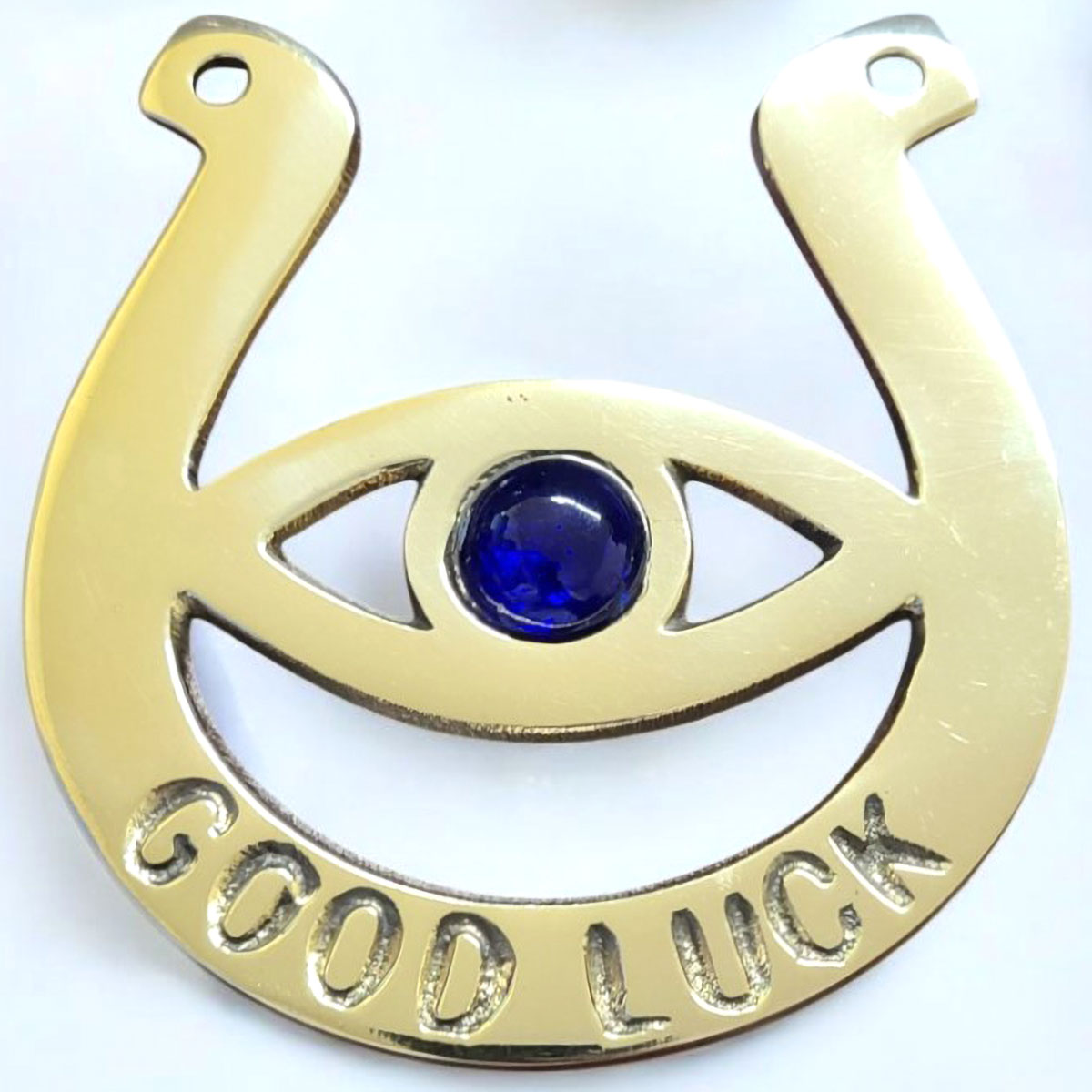
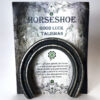
A brass-colored horseshoe set with a blue evil eye and carved with the words “Good Luck”, joining two of the most widespread protective charms.
Quick Uses
- Door Ward: Hang it above your front door to guard the home.
- Workspace Charm: Hang it near your desk or shop counter against envy.
- Evil Eye Cleanse: Hang it where visitors enter to catch envious glances.
How to Use It
Witchcraft & Folk Magick
- Hang it above the door, points up to hold good fortune, with a sprig of rosemary tucked behind it.
- Hang it at a shop or workspace entrance to turn back envy from customers or rivals.
Hoodoo & Rootwork
- Dress the back with a little protection oil each new moon and rehang it over the door.
- Hang it over the door after an uncrossing to keep fresh trouble from coming back in.
Ceremonial & Occult Magick
- Consecrate it with the four elements and hang it as the guardian sign of your temple door.
- Trace a banishing pentagram before it each month to renew its ward.
Demonology & Black Magick
- Hang it at the door of the room where you evoke, so nothing called follows you out.
- Keep it on the wall behind you during curse work so the eye returns any envy or hex aimed your way.
A Simple Working
- On a Saturday, burn a little frankincense near the front door.
- Pass the horseshoe through the smoke.
- Sprinkle a pinch of salt across the threshold.
- Hold the horseshoe and say that envy and ill will turn back at this door.
- Hang it above the door with the points up.
- Sweep the salt out of the house the next morning.
Pairs Well With
- Protection Oil: To dress the horseshoe each month.
- Frankincense Resin: For blessing the charm before hanging.
- Sea Salt: To lay across the threshold.
- Rosemary: A protective herb to tuck behind it.
What You Receive
One brass-colored horseshoe with a blue evil eye at its center and “Good Luck” carved at the bottom.
Origin & Lore
Both halves of this charm were made to ward. The horseshoe has long been hung over doorways for protection and luck, and the blue eye bead, the nazar of Turkey and Greece, is used across the Mediterranean and Middle East to turn back the evil eye of envy.
An English legend says that Saint Dunstan, a blacksmith before he became Archbishop of Canterbury, nailed a horseshoe to the Devil’s hoof and only removed it when the Devil promised never to enter a house with a horseshoe over the door.
Did You Know?
In Turkey the blue eye bead is called a nazar and is often pinned to babies’ clothes for protection.
Related products