




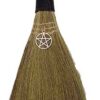
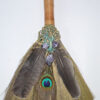
Evil Eye Herb Altar Broom (11″)
$14.25
Sweep Away the Evil Eye
An 11″ hand-held altar broom of natural botanicals with a glass evil eye charm, reached for when someone’s envy or ill will has settled on a home or a person.
Quick Uses
- Envy Sweep: Sweep from the back of the home to the front door after an envious visitor.
- Eye Ward: Hang it by the entrance so the glass eye stares back at whoever comes in.
- Uncrossing Brush: Sweep your body downward with it before an uncrossing bath.
How to Use It
Witchcraft & Folk Magick
- Sweep each room toward the door while naming the envy you are clearing, then shake the broom outside.
- Hang it on the wall facing the entrance as a standing ward against the evil eye.
Hoodoo & Rootwork
- Brush the broom down your body from crown to feet and flick it toward the door to throw off crossed conditions.
- Sweep salt and red brick dust off your doorstep after laying them overnight.
Demonology & Black Magick
- Sweep the operator’s circle after returning a curse so none of it lingers on you.
- Hang the eye toward the door of your working room to deflect any hex sent back.
A Simple Working
- On a Tuesday or Saturday morning, open your front door.
- Light a blue chime candle in the back room of your home.
- Starting there, sweep each room toward the front door, saying “Envy out, eye closed.”
- Sweep the gathered dust over the threshold and off your step.
- Sprinkle a line of sea salt across the doorway.
- Hang the broom inside the door with the glass eye facing out.
Pairs Well With
- Sea Salt: For a threshold line after sweeping.
- Blue Chime Candles: The colour most linked with the evil eye charm.
- Uncrossing Bath Salts: To follow a body sweep with a bath.
- Red Brick Dust: A classic doorway guard in rootwork.
What You Receive
One hand-held altar broom made with natural botanicals and a glass evil eye charm, approximately 11″ long (sizes vary slightly).
Origin & Lore
This broom joins two old protections: the broom, first used to sweep dirt and unwanted influence out of the home, and the evil eye charm, made to turn back the harm carried by an envious look.
Belief in the evil eye, the idea that an envious gaze can bring misfortune, was recorded in ancient Greece and Rome and remains strong around the Mediterranean and the Middle East. The blue glass eye bead, called a nazar in Turkey, is hung in homes, cars and on babies’ clothing to look back at the harmful gaze.
Did You Know?
The blue glass evil eye bead is so common in Turkey that it is hung in homes, shops and cars and pinned on newborns’ clothes.
Related products


