


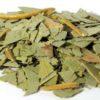
The battle of Marathon was fought on a field named for fennel: marathon is the Greek word for the plant.
Origin & Traditional Use
Fennel is a tall, feathery herb of the Mediterranean whose seeds have flavoured bread, sausage and liqueurs for thousands of years. It was grown in every monastery and cottage garden of medieval Europe as a kitchen and household herb.
Uses by Tradition
Witchcraft & Folk Magick
- Midsummer protection: fennel was hung over doors and windows on Midsummer Eve against ill-wishing and witchcraft; seeds were stuffed into keyholes to keep spirits from entering.
- Courage: seeds carried in a pouch or chewed before facing something hard.
- Purification: seeds added to purification incense or a ritual bath.
A Simple Working
- On Midsummer Eve or a Sunday, set out a tablespoon of fennel seed, a pinch of salt and a short length of red thread.
- Mix the seed and salt in your palm, naming the doors you mean to protect.
- Put a pinch of the mixture into each keyhole or along the sill of each outer door.
- Tie the rest into a small cloth bundle with the red thread.
- Hang the bundle above the front door.
- Replace it the following Midsummer.
Pairs Well With
- St John’s wort, the other great Midsummer door herb.
- Rue for protection and banishing.
- Salt for warding thresholds.
- Red thread to tie protective bundles.
Lore & History
Fennel, as fille, is one of the nine sacred herbs of the Anglo-Saxon Nine Herbs Charm, recorded in a tenth-century English manuscript. Roman writers claimed that snakes rubbed against fennel to renew their eyesight after shedding their skins.
What You Receive
Dried fennel seed, available in 1 oz, 4 oz and 1 lb.
Did You Know?
Seventeenth-century New England Puritans chewed fennel and dill seed through long sermons, which earned them the nickname meetin’ seed.
| Weight | N/A |
|---|---|
| Size | 1 oz, 4 oz, 1 lb |
Related products




All Herbs