


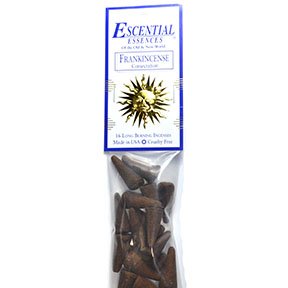
Frankincense Incense Cones
$6.55
The Incense of Consecration
Classic frankincense cones, the traditional incense of consecration, burned to sanctify tools, altars and the self before ritual.
Quick Uses
- Consecrate Tools: Pass a new athame, wand or chalice through the smoke while naming its purpose.
- Sanctify the Altar: Burn a cone on a fresh altar before using it for the first time.
- Sun Rites: Burn one on Sundays for solar success workings.
How to Use It
Witchcraft & Folk Magick
- Burn a cone as you consecrate a tool by the four elements, using the smoke for air.
- Light one to bless a new home or a newly set altar.
Hoodoo & Rootwork
- Burn it beside a candle dressed with blessing or success oil when petitioning for a new job or promotion.
- Light a cone to bless a mojo bag after you have filled and fed it.
Ceremonial & Occult Magick
- Use it as your solar incense, the standard incense for Sunday and for invocations of solar powers.
- Burn a cone before any rite of consecration, charging a talisman or dedicating a new temple space.
Demonology & Black Magick
- Burn it to consecrate the triangle of art and the circle before goetic evocation.
- Light one to consecrate sigils and seals for pacts with spirits.
A Simple Working
- On a Sunday at noon, set your new tool on a clean cloth.
- Light a yellow chime candle and a frankincense cone.
- Sprinkle the tool with a pinch of sea salt for earth.
- Pass it through the smoke for air and near the flame for fire.
- Sprinkle it with a few drops of water.
- State the tool’s name and purpose and say it is consecrated.
- Wrap it in the cloth until you use it.
Pairs Well With
- Yellow Chime Candles: For solar and success work.
- Sea Salt: For earth in consecration.
- Frankincense Oil: To anoint tools after the smoke.
- Cone Incense Burner: To keep ash off the altar cloth.
What You Receive
One package of 16 long-burning Frankincense scented incense cones, made in the USA from cruelty-free, cosmetic-grade ingredients.
Origin & Lore
Frankincense was first burned to consecrate temples and offer prayers to the gods. The resin of the Boswellia tree was gathered in southern Arabia, Somalia and Oman, where it was harvested by cutting the bark and letting the sap harden into tears.
It was used in the incense of ancient Egypt and Israel, burned by Greeks and Romans to the gods, and adopted by the Christian Church. Ceremonial magicians from the Renaissance onward named it the incense of the sun.
Did You Know?
Frankincense was so central to the ancient Arabian trade that Oman’s frankincense trade sites are listed by UNESCO as the Land of Frankincense.
Related products


