


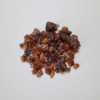
Frankincense & Myrrh granular incense
Price range: $2.15 through $26.35
The classic pairing of two resins · Available in 4 sizes
A granular blend of frankincense and myrrh burned on charcoal for consecration, purification, protection and prayer.
Quick Uses
- House blessing: burn a pinch in each room after a move, carrying the censer sunwise and finishing at the front door.
- Altar: pass each tool through the smoke when setting up or refreshing an altar.
- Temple: burn it before any ritual to cleanse the space and give it weight.
- Saints: burn it before images of saints and the Holy Family, especially at Christmas and Epiphany.
How to Use It
Witchcraft & Folk Magick
- House blessing: burn a pinch in each room after a move, carrying the censer sunwise and finishing at the front door.
- Altar consecration: burn it when setting up or refreshing an altar, passing each tool through the smoke.
- Ancestor altar: the pairing is a fitting offering for the dead, sweet and solemn at once.
Ceremonial & Occult Magick
- Temple purification: burn it before any ritual to cleanse the space and give it weight.
- Sun and Moon balance: frankincense is the incense of the Sun and myrrh is used in lunar and underworld rites, and many magicians burn the two together for workings that need both.
Folk Catholicism & Spiritism
- Home altars: folk Catholics burn frankincense and myrrh before images of saints and the Holy Family, especially at Christmas and Epiphany.
- House blessings at Epiphany, marked in chalk on the door lintel, are often done with this pairing of resins.
A Simple Working
- Light a disc of charcoal in a censer filled with sand.
- When it has ashed over, sprinkle a small spoonful of the blend on top.
- Open the front door and windows.
- Carry the censer sunwise through every room, saying “This house is blessed, this house is clean.”
- Finish at the front door and let the smoke drift outside.
- Close the door and let the incense burn out on the altar.
Pairs Well With
- Charcoal tablets: to burn the resin on.
- A brass censer: for carrying smoke through the house.
- Blessing chalk: to mark the door at Epiphany.
- A white candle: to light alongside for prayer.
What You Receive
A granular blend of frankincense and myrrh resins for burning on charcoal, available in 1/3 oz, 1 oz, 1.5 oz and 1 lb.
Origin & Lore
Frankincense and myrrh have been burned together for thousands of years, the bright, lemony smoke of the first balanced by the dark, bitter warmth of the second. Both are resins tapped from trees of southern Arabia and the Horn of Africa. Together they make the classic temple and church incense of the ancient world.
Pliny records the story that the emperor Nero burned more incense at the funeral of his wife Poppaea than Arabia could produce in a whole year.
In the Gospel of Matthew, the Magi bring gold, frankincense and myrrh to the infant Jesus, and from early centuries Christian writers read the gifts as kingship, divinity and death. Both resins travelled north along the incense routes from southern Arabia, through Petra and Gaza, to the Mediterranean world. The blend sold today is a simple mixture of the two resins, the way they have always been burned together.
Did You Know?
The custom of chalking “20+C+M+B+26” over a door at Epiphany combines the year with the initials of the Magi, Caspar, Melchior and Balthasar, also read as “Christus mansionem benedicat”, “May Christ bless this house”.
| Weight | N/A |
|---|---|
| Size | 1/3 oz, 1 oz, 1.5 oz, 1 lb |
Related products


