

Hoodoo court work gives the instruction plainly: chew a piece of the root, then spit the juice where the judge will walk.
Origin & Traditional Use
Galangal is the rhizome of Alpinia galanga and its relatives, members of the ginger family from South and Southeast Asia. It is a staple spice of Thai and Indonesian cooking, and it reached medieval Europe along the spice routes, where cooks and apothecaries prized it.
Uses by Tradition
Hoodoo & Rootwork
- Court cases: a small piece is chewed on the way to court and the juice spat discreetly on the courtroom floor or in the hallway before the judge comes in.
- Strength and success: carried in a mojo bag alongside High John the Conqueror root, the bigger John to its little one.
- Petition work: a piece placed on a written court petition under a candle in the days before the hearing.
Witchcraft & Folk Magick
- Money and protection: carried in a pouch or worn as a charm.
- Breaking spells: powdered and burned on charcoal to break hexes and crossed conditions.
A Simple Working
- Three nights before a hearing, write your case number and the outcome you want on a slip of paper.
- Lay a piece of galangal root and a deer’s tongue leaf on the paper.
- Set a small brown or purple chime candle on top and burn it, saying your outcome aloud.
- Repeat on the next two nights with fresh candles.
- On the morning of the hearing, take the galangal with you.
- Chew it on the way in and spit the juice discreetly where the judge will pass.
Pairs Well With
- Deer’s tongue for persuasive speech.
- Calamus root for commanding the situation.
- High John the Conqueror root for strength and mastery.
- Bay leaf for written petitions.
Lore & History
Galangal was a costly luxury in medieval Europe and is named among the Cook’s spices in the Canterbury Tales as galingale. In hoodoo it took the name Little John, set beside High John and Low John among the conquering roots.
What You Receive
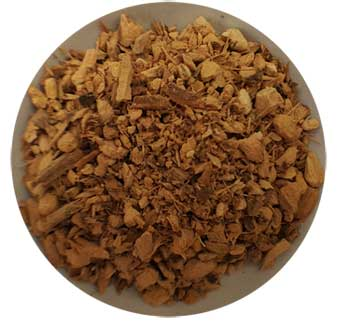
Cut dried galangal root, available in 1 oz and 1 lb.
Did You Know?
The Thai soup tom kha gai is named for galangal: kha is the Thai word for the root.
| Weight | N/A |
|---|---|
| Size | 1 oz, 1 lb |
Related products