



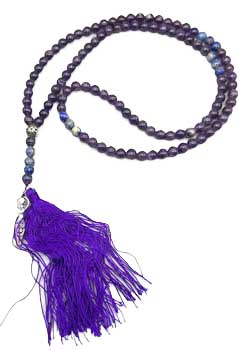
Goddess Amethyst and Lapis Lazuli Japa Mala
$46.15
Purple And Blue For The Goddess
A prayer mala of amethyst and lapis lazuli beads with a goddess charm, for counting devotions to the divine feminine and keeping clear sight.
Quick Uses
- Devotion: Count prayers or chants to your goddess, one bead at a time.
- Reading Ritual: Wear it during divination for clear sight.
- Altar Drape: Lay it before a goddess image between sessions.
How to Use It
Witchcraft & Folk Magick
- Use it to count praise chants to your goddess on the full moon.
- Wear it during tarot or rune readings so the purple and blue stones keep your sight clear.
Ceremonial & Occult Magick
- Count repetitions of an invocation to a goddess form you work with.
- Consecrate it with incense and lay it on the altar during Venus or lunar rites.
Demonology & Black Magick
- Count the repetitions of a spirit’s name during long chanting sessions.
- Wear it during spirit work as a reminder of your own patron and protector.
A Simple Working
- Light a blue and a purple candle on your altar.
- Set a goddess image or symbol between them.
- Hold the mala at the goddess charm.
- Chant her name or a short praise once on each bead.
- Return to the charm and give thanks.
- Leave the mala before her image until the candles go out.
Pairs Well With
- Goddess Statue: A focal point for devotion.
- Blue Candles: For lapis and wisdom work.
- Lavender: A gentle offering herb.
- Amethyst Cluster: A resting place for the mala.
What You Receive
One japa mala of amethyst and lapis lazuli beads with a goddess charm. Natural stones vary in colour and pattern. From India.
Origin & Lore
Amethyst, the purple quartz the Greeks called not drunk, was worn for sobriety and clear judgement. Lapis lazuli, blue with gold pyrite flecks, was treasured in Egypt and Mesopotamia and carved into amulets and seals.
In the Sumerian poem of Inanna’s descent to the underworld, the goddess wears a necklace of lapis lazuli beads and carries a lapis measuring rod, among the ornaments she must give up at each gate.
Did You Know?
Lapis lazuli was ground to make ultramarine, the costly blue pigment that Renaissance painters often reserved for the robes of the Virgin Mary.
Related products


