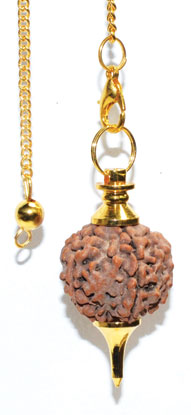
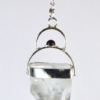
Gold Rudraksha Pendulum
$4.35
The Eye Of Shiva
A rudraksha seed pendulum on gold-toned chain and hardware, drawing on the seed’s long use in prayer and protection for calm, steady divination.
Quick Uses
- Divination: Use it for yes/no questions and for dowsing over charts and lists.
- Calm: Roll the rudraksha bead between your fingers before a reading to settle the mind.
- Protection: Dowse a room to see where protective work is needed, then circle the pendulum clockwise there.
- Meditation: Hold it during chanting or prayer and use the seed as a focus.
How to Use It
Witchcraft & Folk Magick
- Dowse over a home’s rooms to find where a protection charm should be hung.
- Roll the seed between your fingers as a prayer bead while you speak a spell aloud.
Ceremonial & Occult Magick
- Use it to still the mind before meditation or mantra work, holding the seed while you breathe.
- Dowse over a list of days or hours to choose the right time for a devotional rite.
Demonology & Black Magick
- Before an evocation, dowse whether you are properly warded and whether the circle is sound.
- After a working, ask through the pendulum whether the spirit has gone and whether anything has followed you out.
- Use it to divine which protective seal or ward should guard your altar.
A Simple Working
- Light a stick of sandalwood incense and a single ghee lamp or white candle.
- Sit quietly and roll the rudraksha bead between your fingers for a few slow breaths.
- Chant “Om Namah Shivaya” or a prayer of your own tradition while you hold it.
- Let the pendulum hang over your open hand and ask whether you are protected.
- If the answer is no, circle the pendulum clockwise over your head and heart.
- Ask again; when the answer is yes, give thanks and let the incense finish.
Pairs Well With
- Sandalwood incense: the traditional companion to rudraksha in prayer.
- A mala of rudraksha beads: for mantra work between readings.
- A pendulum chart: for answers beyond yes and no.
- A silk pouch: to keep the seed and chain clean.
What You Receive
One rudraksha seed pendulum with gold-toned chain and hardware. Hangs approximately 9″-10″; sizes vary.
Origin & Lore
Pendulums began as instruments for finding water, ore and buried things, and were later turned to divination over letters, maps and charts.
In Hindu tradition the rudraksha seed is linked to Shiva; its name joins Rudra, an early name of the god, with aksha, “eye” or “tear”, and stories tell that the trees grew from tears Shiva shed. The seeds have long been strung as malas for prayer and worn by Shaiva devotees.
Did You Know?
Rudraksha seeds come from the tree Elaeocarpus ganitrus, and they are graded by their mukhi, the number of natural clefts running down the seed.
| Weight | 0.07 lbs |
|---|
Related products