


Gold Yin Yang Incense Burner (3 1/2″)
$13.15
Balance Held in Smoke
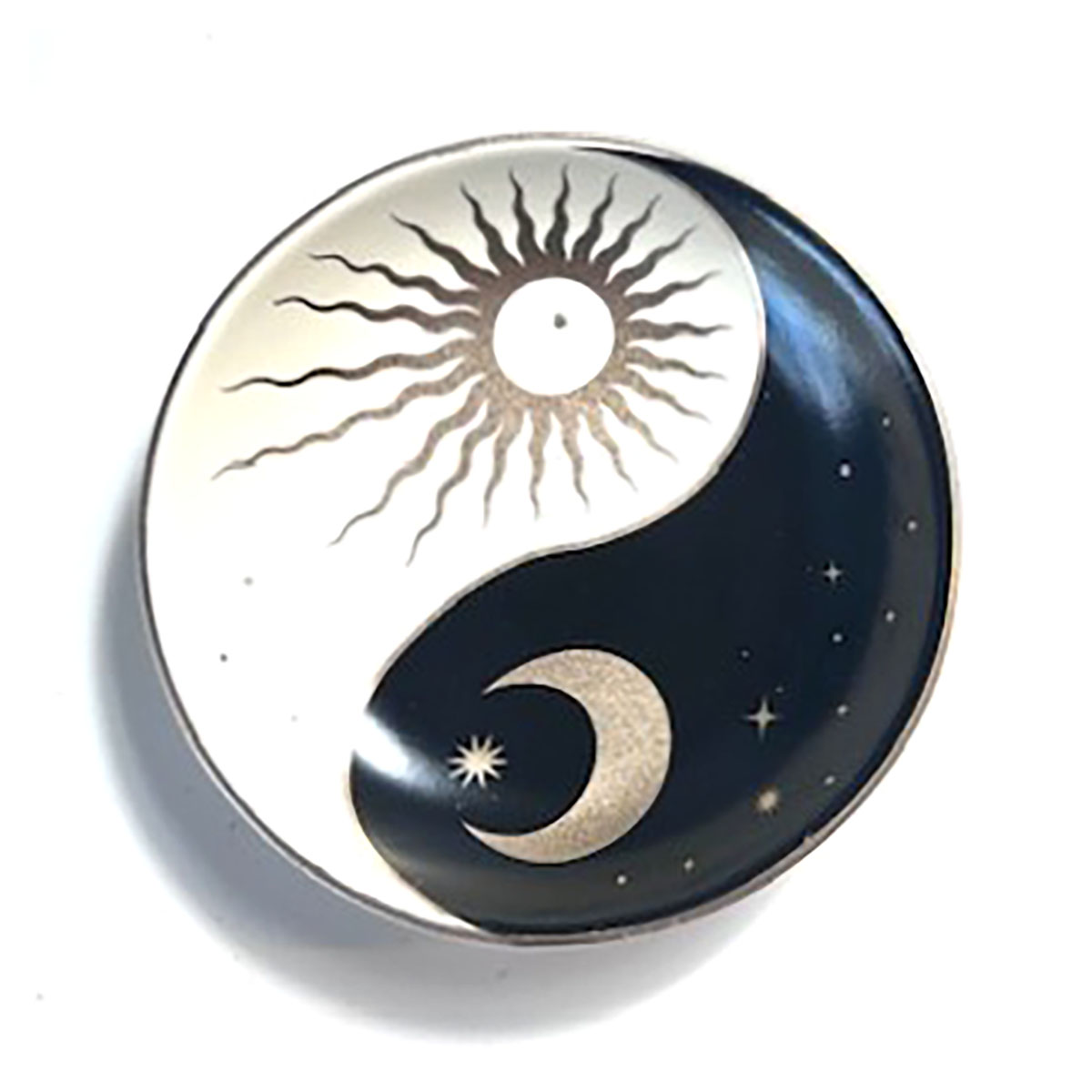
A 3 1/2″ ceramic stick incense burner with a classic yin yang design accented in gold, used by practitioners working to bring balance between opposing forces, people or parts of the self.
Quick Uses
- Harmony Smoke: Burn a stick in it in a shared room to calm a divided household.
- Reconciliation Altar: Set photos of two people on either side and burn incense between them.
- Balance Meditation: Burn a stick and focus on the two halves while you meditate.
How to Use It
Witchcraft & Folk Magick
- Burn lavender or rose incense in it in the main room of a home where people keep clashing.
- Place it at the centre of a spell to rebalance light and dark in your life after a hard season.
Hoodoo & Rootwork
- Set a picture of each person on either side of the burner and burn a reconciliation incense between them.
- Burn a peaceful home incense in it while you pray over a cup of sweetened water for the household.
Ceremonial & Occult Magick
- Use it as a focus in meditation on polarity, the joining of active and receptive forces.
- Burn incense in it while studying the I Ching or Taoist texts.
Demonology & Black Magick
- Burn a stick in it during work with a spirit to keep the exchange balanced and fair.
- Use it in shadow work to sit with what you have hidden in yourself.
A Simple Working
- Choose a quiet evening and set the burner between a white chime candle and a black chime candle.
- Light the white candle on the left and the black candle on the right.
- Light a stick of sandalwood incense in the burner.
- Name one thing in your life that feels out of balance.
- Breathe in for the light half and out for the dark half until the stick burns low.
- Let both candles burn out together.
Pairs Well With
- White Chime Candles: For the light half of the working.
- Black Chime Candles: For the dark half of the working.
- Sandalwood Incense Sticks: A calm, grounding scent.
- I Ching Book: For study and divination on balance.
What You Receive
One 3 1/2″ ceramic stick incense burner with a classic yin and yang design accented in gold tones.
Origin & Lore
The yin yang symbol was first a teaching image of Chinese philosophy, showing how two opposing forces each contain the seed of the other. Yin is the dark, receptive principle and yang the bright, active one, and the pair appear throughout Taoist thought and the I Ching.
The swirling diagram, called the taijitu or diagram of the supreme ultimate, took the familiar form seen here in later imperial China. It is now one of the world’s best known symbols of balance.
Did You Know?
The yin yang symbol is properly called the taijitu, the diagram of the supreme ultimate.
Related products


