

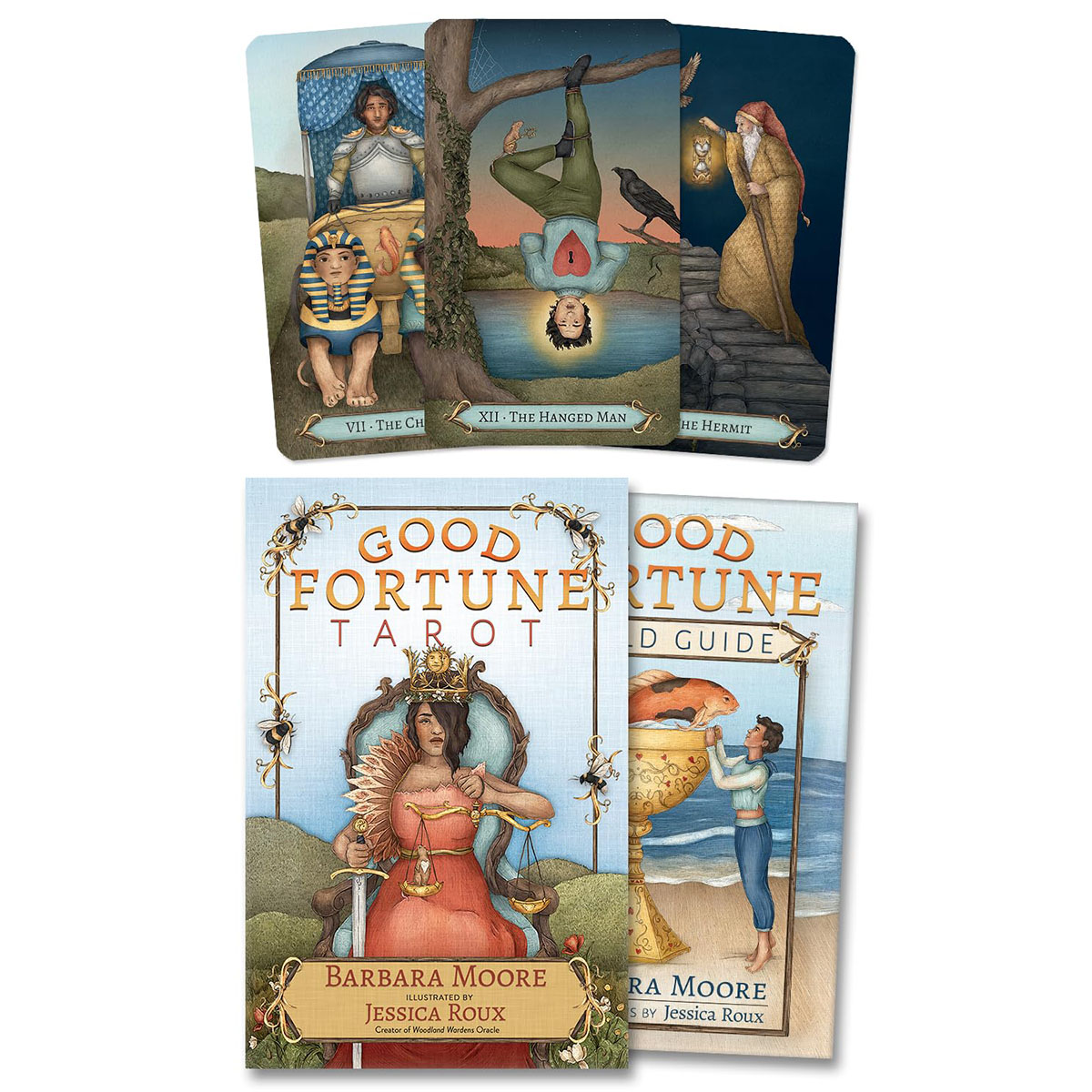
Good Fortune Tarot (Deck & Book) by Moore & Roux
$36.29
Tarot For Turning Your Luck
A tarot that blends Marseille touches with Rider-Waite-Smith imagery around the theme of luck, used by readers who want to see where fortune can be worked.
Quick Uses
- Luck Reading: Ask where luck is hiding in a hard situation and read the cards for the opening.
- Money Spell Focus: Set the Wheel of Fortune or the Ace of Pentacles under a green candle.
- Gambling Check: Draw a single card before a game or a risky decision and act only on a clear yes.
- Journal Draws: Record a weekly card and track how your fortune shifts across a month.
How to Use It
Witchcraft & Folk Magick
- Lay the Wheel of Fortune in a luck charm bag or under a green candle on a Thursday, the day of Jupiter.
- Read at the new moon for what to plant and at the full moon for what to harvest.
Hoodoo & Rootwork
- Dress a green or gold candle with a money oil and stand it on the Ace of Pentacles.
- Draw a card before playing a hand or a number to decide whether to back your luck that day.
Demonology & Black Magick
- Read before a pact or offering for wealth, asking whether the spirit’s terms favour you.
- Divine which spirit to approach for a money or luck working by assigning cards and drawing among them.
- Lay the Wheel at the centre of a working to turn another’s fortune, and the Ten of Swords to turn it against them.
A Simple Working
- On a Thursday, light a green chime candle dressed with a little cinnamon.
- Pull the Wheel of Fortune from the deck and set it face up before the candle.
- Shuffle the rest and draw three cards: where luck is blocked, where it is waiting, and what to do.
- Place a coin on each card as you read it.
- Keep the coins in your wallet afterward as carriers of the reading.
- Note the reading in your journal and check back in a month.
Pairs Well With
- Cinnamon sticks: a common spice in money and fast-luck work.
- Green chime candles: the traditional colour for prosperity spells.
- Pyrite: a stone kept in money drawers and with prosperity decks.
- Mojo bag: for carrying a reading’s coin or a copied card image.
What You Receive
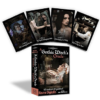
One tarot deck with linen-textured cards and a full-colour guidebook of tips and interpretations.
Origin & Lore
Tarot was born as a card game in Renaissance Italy and was adopted for fortune-telling in France at the close of the eighteenth century. Two great lineages followed: the Tarot de Marseille with its woodcut-style pips, and the illustrated Rider-Waite-Smith deck of 1909.
This deck deliberately mixes the two, adding Marseille touches to RWS scenes, and frames the whole 78 around fate, fortune and making the best of the cards you are dealt.
Did You Know?
Tarot de Marseille decks were printed from carved woodblocks and coloured by stencil; one of the earliest complete surviving examples was made by the Parisian card-maker Jean Noblet around 1650.
| Weight | 2 lbs |
|---|
Related products