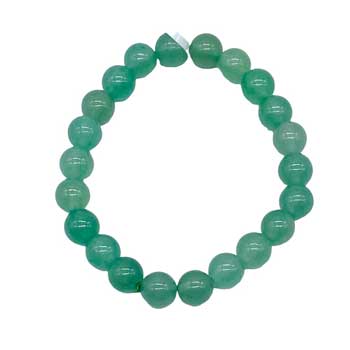
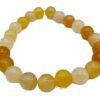
Green Aventurine Bead Bracelet (8mm)
$4.35
The Gambler’s Green Stone
A bracelet of 8mm green aventurine beads, a classic luck and prosperity stone also worked for spiritual healing and clearing blocks in the chakras.
Quick Uses
- Lucky Wrist: Wear it on your money hand when playing cards, buying tickets or taking a chance.
- Clearing Blocks: Hold it over the heart while visualising stuck energy breaking up and moving.
- Prosperity: Leave it on top of your wallet overnight to feed it drawing power.
- Heart Chakra: Rest it on your chest during meditation for heart chakra balancing.
How to Use It
Witchcraft & Folk Magick
- Charge it in a jar of green herbs such as basil and mint for one night before a waxing moon.
- Wear it while sowing seeds or planting, an old way to tie your luck to growth.
- Tuck it into the soil of a potted money plant for a night, then wear it to link your fortunes to the plant’s growth.
Hoodoo & Rootwork
- Dress it with a drop of Lucky Hand or Fast Luck oil before gambling and wear it on your playing hand.
- Keep it in a mojo bag with a lodestone and a piece of John the Conqueror root.
Ceremonial & Occult Magick
- Wear it in Jupiterian or Venusian workings for increase and good fortune.
- Use it as a green stone of the heart centre in chakra meditation and energy work.
Demonology & Black Magick
- Offer it on the altar of a spirit of luck or wealth as a token while asking for help in a venture.
A Simple Working
- On a waxing moon, place a green candle on a plate.
- Ring it with a few dried basil leaves and three coins.
- Lay the bracelet around the candle, inside the ring of basil.
- Light the candle and say what kind of luck you are calling in, plainly and specifically.
- Let it burn down completely.
- Wear the bracelet and carry one of the coins in your pocket.
Pairs Well With
- Lucky Hand Oil: A traditional gambling and luck dressing oil.
- Lodestone: Hoodoo’s classic drawing stone for money and luck.
- Green Candles: For money, growth and luck workings.
- Dried Basil: A traditional herb of prosperity in folk magick.
What You Receive
One stretch bracelet of 8mm green aventurine beads.
Origin & Lore
Green aventurine is widely called the gambler’s stone in modern practice and is traditionally carried for luck, prosperity and opportunity, and worked for spiritual healing of the heart.
Aventurine is a quartz with tiny platy inclusions that create a glittering effect called aventurescence. In green aventurine those inclusions are usually fuchsite, a chromium-rich mica. In folk practice green stones in general are tied to money, growth and the fertile earth, which is part of why aventurine became a standard luck charm.
Did You Know?
The name aventurine comes from Italian a ventura, by chance, after a glittering glass said to have been discovered by accident in Venice.
Related products