
Green Man oil
Price range: $3.25 through $9.85
For the leaf-faced spirit of the greenwood · Available in 2 sizes
An anointing oil for the Green Man, the leaf-faced spirit of the greenwood, used in tree, forest and growth magick.
Quick Uses
- Tree work: anoint your palms before sitting with an old tree, or touch a drop to its roots as an offering.
- Growth: dress a green candle for money, garden or business workings that need slow, lasting growth.
- Beltane: anoint the brow before May Eve rites or dress the Beltane altar candle.
- Nature spirits: anoint a green candle before communing with the spirit of a wood or garden.
How to Use It
Witchcraft & Folk Magick
- Tree work: anoint your palms before sitting with an old tree, or touch a drop to its roots when making an offering.
- Growth and prosperity: dress a green candle for money, garden or business workings that need slow, steady growth.
- Beltane: anoint the brow before May Eve rites or dress the candle on a Beltane altar.
Ceremonial & Occult Magick
- Nature spirits: anoint a green candle before communing with the spirit of a place, a wood or a garden.
- God-form work: anoint the brow when invoking the vegetation god in rites of the wheel of the year.
A Simple Working
- Find a tree you can visit regularly.
- Anoint your palms with Green Man oil.
- Place both hands on the trunk and introduce yourself.
- Pour a little fresh water at the roots as an offering.
- Sit with your back to the tree for ten minutes and listen.
- Leave a small, biodegradable offering such as oats or bread, and thank the tree before you go.
Pairs Well With
- A green candle: for growth and prosperity work.
- Oak leaves: the tree most often carved in Green Man heads.
- Patchouli: an earthy scent for money and earth magick.
- Horned God oil: for rites to the god in both his forest and wild forms.
What You Receive
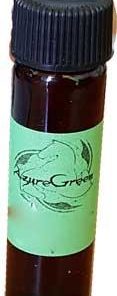
Green Man oil, available in 2 dram and 1 oz sizes.
Origin & Lore
Foliate heads appear in Roman art and spread through medieval church carving across Britain, France and Germany. They were given the name “Green Man” only in 1939. In modern Paganism the Green Man has become the spirit of trees, growth and the wild greenwood, and Green Man oil is a modern blend made for that work.
High in the vaults of medieval cathedrals, faces peer out of carved leaves, with oak and hawthorn sprouting from their mouths. Nobody wrote down who they were meant to be.
Rosslyn Chapel near Edinburgh is said to contain over a hundred carved green men. In English May Day custom, Jack-in-the-Green, a man dressed in a frame of leaves, led London chimney sweeps through the streets from the eighteenth century, and the custom has been revived in towns such as Hastings. Whether the church carvings carry any memory of pre-Christian belief is debated; the oil is a modern blend.
Did You Know?
The name “Green Man” was coined by Lady Raglan in a 1939 article in the journal Folklore.
| Weight | N/A |
|---|---|
| Size | 2 dram, 1 oz |
Related products