
Green Man Wall Plaque
$47.25
The Face of the Greenwood
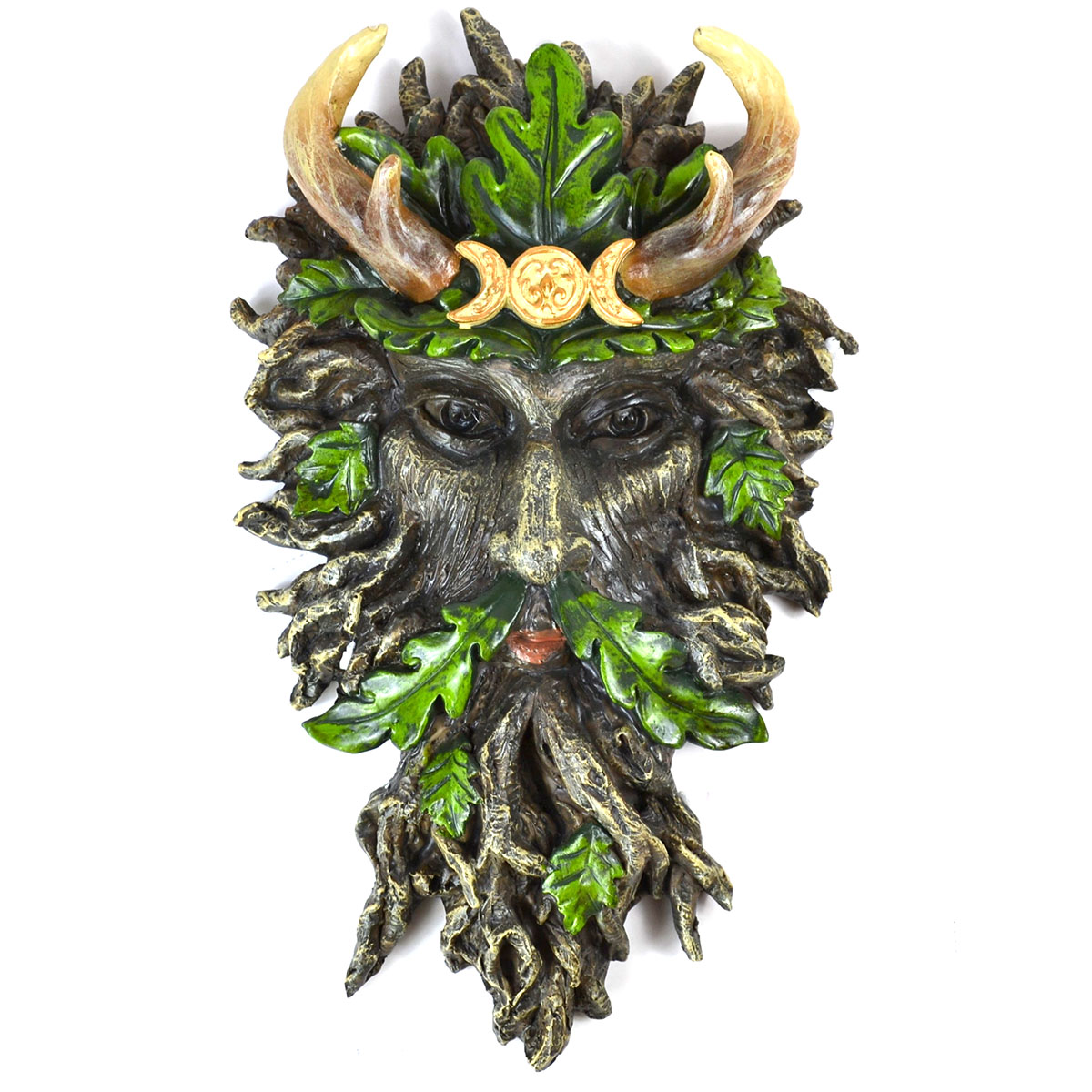
A sculpted Green Man face emerging from leaves, hung by witches and pagans who want the spirit of wild growth watching over home and garden.
Quick Uses
- Garden Guardian: Hang it on a garden wall or shed to keep a living spirit of the land present among your plants.
- Hearth Blessing: Mount it over a kitchen doorway as a sign of abundance and green life in the home.
- Seasonal Altar: Make it the centrepiece of a Beltane or midsummer altar.
How to Use It
Witchcraft & Folk Magick
- Speak to him as the spirit of the land when you plant seeds, and leave a little water or bread at the wall below.
- Hang fresh greenery around the plaque at Beltane and dried leaves at the autumn equinox to mark the turning year.
Hoodoo & Rootwork
- Tuck a small packet of bay leaf and cinnamon behind the plaque to keep prosperity growing in the house.
- Wash the wall beneath it with a money floor wash when you move into a new home.
Ceremonial & Occult Magick
- Use him as a focus for meditation on the vegetative cycle of death and rebirth.
- Set him in the east or north of your temple as a face of elemental earth and growth.
Demonology & Black Magick
- Hang him at the threshold of an outdoor working space as a guardian presence of the land before you call other spirits.
- Ask his leave before gathering herbs or wood from the wild for spirit offerings.
A Simple Working
- At the new moon, hang the plaque where you can see it daily.
- Light a green chime candle beneath it.
- Hold a few seeds or a sprig of rosemary in your hand.
- Name one thing you want to grow in your life over the coming months.
- Plant the seeds, or set the rosemary in water, below the plaque.
- Tend it each day and greet the Green Man as you do.
Pairs Well With
- Green Chime Candles: For growth and abundance work beneath the plaque.
- Bay Leaves: A classic prosperity herb to tuck behind it.
- Moss Agate: The stone of gardens and green things.
- Oakmoss: A woodland herb that suits his spirit.
What You Receive
One Green Man wall plaque, 10 1/2″, showing a sculpted face emerging from foliage.
Origin & Lore
The Green Man began as an architectural ornament: the foliate head, a face made of or sprouting leaves, carved into medieval churches and cathedrals across Europe. Its original meaning is unknown, but it is widely read as a symbol of nature, growth and rebirth.
The name itself is modern. Lady Raglan coined the term in a 1939 article in the journal Folklore, linking these carvings to May Day figures such as Jack in the Green. Since then the Green Man has become a beloved symbol of the wild god in modern paganism and witchcraft.
Did You Know?
The name “Green Man” for the leafy faces in medieval churches was only coined in 1939, by the folklorist Lady Raglan.
Related products