Hathor Statue (11″)
$80.25
The Lady of the West, crowned and holding life
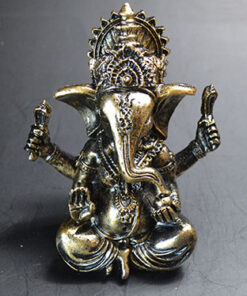
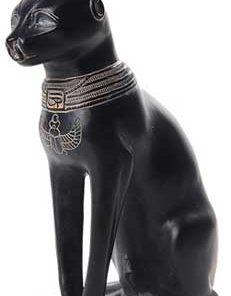
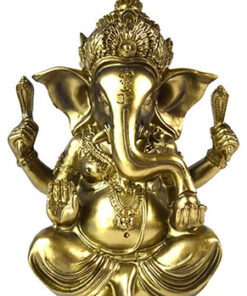
A regal statue of Hathor wearing her crown of office and holding a golden ankh, made to stand as the image of the goddess on your altar or shrine.
Quick uses
- Devotion: a home for Hathor on the altar for offerings and prayer.
- Love & beauty: the focus of glamour, love and joy workings.
- Spirit work: a guardian presence for work with the dead and the West.
In stock
How to Use It
Deity & Egyptian Magick
- In Egypt a statue was not decoration: it was a vessel the divine could inhabit, fed and honoured daily in the temple. This image of Hathor can serve the same role in your shrine.
- Offer her music, flowers, perfume, beer, milk or red wine; Hathor was the goddess of joy, dance and drunkenness, and she delights in celebration.
- Set the statue where love, beauty and fertility magick are done, and ask her blessing over glamour work, mirrors and cosmetics.
- The golden ankh she holds is the sign of life; touch it to charms and amulets you wish to bless in her name.
Witchcraft & Folk Magick
- Place her at the centre of a love altar with rose petals, copper and a mirror, all things sacred to her.
- Light a red or gold candle before her on a Friday when working for joy, sweetness and attraction.
Ceremonial & Occult Magick
- Use the statue as a focus for invocation in Egyptian-style ritual, reciting her epithets, Lady of the Sycamore, Lady of Turquoise, Eye of Ra, before asking for her presence.
- In Hermetic and Thelemic practice she can stand in the East or the West of the temple as a guardian of the threshold.
Demonology & Black Magick
- As the Eye of Ra, Hathor became the raging lioness Sekhmet; call on this fierce face of the goddess as a protector before evocation.
- Set the statue outside the circle as a divine witness when making pacts, so the agreement is sealed under her eye.
- Hathor received the dead in the West; ask her to guard the gates when you work with spirits of the dead or chthonic powers.
- Charge sigils and talismans for love-binding or attraction at her feet before releasing them.
A Simple Working
- Cleanse the statue with incense smoke and set it facing you on the altar.
- Light a gold or red candle and burn myrrh or frankincense.
- Offer a cup of milk, beer or wine and a fresh flower.
- Call her by her names and speak your request for love, joy or protection.
- Leave the offering overnight and pour it out on the earth the next day.
Pairs Well With
- Myrrh resin: the classic Egyptian temple offering.
- Ankh pendant: to wear the sign of life she holds.
- Rose oil: for anointing candles in her honour.
- Copper bowl: for offerings; copper was hers.
- Mirror: one of her sacred objects.
What You Receive
One cold cast resin Hathor statue, 11″ x 6″ x 5″.
Origin & Lore
Hathor was one of the oldest and most loved goddesses of Egypt, a goddess of love, music, dance, motherhood and joy, often shown as a cow, a woman with cow ears, or crowned with horns and the sun disc.
She was also the Lady of the West who welcomed the dead, and in one myth became the destroying Eye of Ra until she was calmed with beer dyed red.
Did You Know?
Hathor’s Egyptian name, Hwt-Hr, means “House of Horus”, because she was seen as the sky in which the falcon god Horus lived.
| Weight | 12.20 lbs |
|---|
Related products