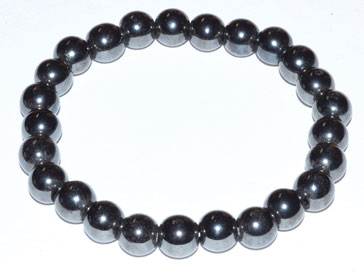
Hematite Bead Bracelet (8mm)
$7.65
Weighty Iron, Grounded Spirit
A bracelet of heavy, glossy 8mm hematite beads, worn for grounding, balancing, centring, clearing energy and keeping calm.
Quick Uses
- Grounding: Wear it after ritual to come fully back to earth.
- Centring: Hold it in your palm and breathe until you feel its weight settle you.
- Clearing: Wear it in busy places to keep stray energy from clinging to you.
- Calm: Wear it during tense moments for steadiness.
How to Use It
Witchcraft & Folk Magick
- Hold it after spellwork and press your palms to the ground with the bracelet between them.
- Wear it in protection spells alongside an iron nail and salt.
- Wear it while setting wards around the home, touching each doorway with the bracelet as you go.
Hoodoo & Rootwork
- Bury it overnight in a dish of salt after a hard day to clear it.
- Wear it while sweeping out negative energy with a broom and floor wash.
- Lay it across a jar of salt and iron nails on the threshold to strengthen a protection jar.
Ceremonial & Occult Magick
- Use it to centre before banishing rituals, feeling its weight as your anchor.
- Wear it during earth element workings at the north quarter.
Demonology & Black Magick
- Wear it as a grounding anchor during evocation and necromantic work, then clear it in salt.
- Wear it as an anchor in graveyard work, then cleanse it in salt before you return home.
A Simple Working
- After a draining day, fill a bowl with sea salt.
- Light a white or black candle beside it.
- Hold the bracelet and breathe out the day, slowly, three times.
- Bury the bracelet in the salt and leave it until the candle burns down.
- Shake off the salt and put the bracelet on.
- Throw the salt out of your home or into running water.
Pairs Well With
- Sea Salt: For clearing the bracelet and your home.
- Iron Nails: Traditional protection tied to iron’s warding power.
- Black Tourmaline Tumbled Stone: A partner grounding and protection stone.
- Gold-Plated Hematite Bead Bracelet: Its gilded twin for layering.
What You Receive
One stretch bracelet of 8mm hematite beads, with a noticeable weight.
Origin & Lore
Hematite has long been worn as a grounding, protective and steadying stone, an iron amulet in a world where iron itself was believed to repel ill spirits.
In ancient Mesopotamia hematite was a favourite material for cylinder seals, and in Egypt it was carved into amulets. As an iron oxide it is also what gives the planet Mars its red colour.
Did You Know?
The name hematite comes from the Greek haima, blood, because the powdered stone is red.
Related products