



Hindu Sandal Hand-Rolled Incense Sticks (8 Pack)
$4.35
Hand-Rolled Sacred Sandalwood
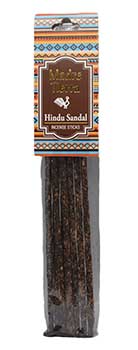
A hand-rolled sandalwood incense with visible resin and botanical grains, the creamy, woody scent of Hindu puja that practitioners burn for blessing and devotion.
Quick Uses
- Puja Offering: Wave a lit stick in slow circles before a deity image.
- Meditation: Burn one at the start of a sitting to deepen concentration.
- Altar Consecration: Light a stick when setting up or renewing an altar.
- Ancestor Honouring: Burn one beside a photograph and a glass of water.
How to Use It
Witchcraft & Folk Magick
- Burn a stick while anointing a new altar cloth and tools to dedicate them.
- Light one on the full moon while writing wishes on paper to be kept on the altar.
Hoodoo & Rootwork
- Burn it during a blessing of a new home, carrying the smoke through every room.
- Smoke a wish written on paper before burning it, a common use of sandalwood in rootwork.
Ceremonial & Occult Magick
- Use it as a general temple incense for invocation, meditation and pathworking.
- Burn it during consecration of a talisman, holding the object in the smoke while reciting your charge.
Demonology & Black Magick
- Offer a stick as a respected, refined scent to a spirit at the opening of contact.
- Burn it to bless the space after an evocation has closed.
A Simple Working
- Wash your hands and set a small dish of rice and a flower before your altar.
- Light a ghee lamp or a white tealight.
- Light one stick from the flame and hold it upright.
- Circle it clockwise three times before the image or altar.
- Speak your offering and set the stick in its holder.
- Sit with the scent until it burns down, then share the rice with birds.
Pairs Well With
- Ghee Lamp or Tealight: The light offering that traditionally accompanies incense in puja.
- Brass Incense Holder: A fitting stand for devotional sticks.
- Rudraksha Mala: Count mantras as the stick burns.
- Fresh Marigolds: A classic flower offering alongside sandalwood.
What You Receive
One pack of 8 hand-rolled Hindu Sandal incense sticks, with visible resin and botanical grains on each stick.
Origin & Lore
Sandalwood, from the tree Santalum album, has been sacred in India for thousands of years. Its paste, chandan, is applied to deity images and worn on the forehead as tilak, and its scent is a mainstay of puja, meditation and temple ritual.
Hand-rolled sticks like these are made by rolling a paste of resins and botanicals onto a thin bamboo core, which is why the grains remain visible on the surface.
Did You Know?
The sandalwood tree is hemiparasitic: in its early years its roots attach to the roots of nearby plants to draw part of its water and nutrients.
Related products


