

Honeysuckle climbs by wrapping itself around other plants, and that grip made it a symbol of devoted love.
Origin & Traditional Use
Honeysuckle is the common name for Lonicera, a climbing shrub with sweet-scented flowers once called woodbine in England. Because it twines so tightly around its support, it became an emblem of faithful, binding love. In magickal practice it is used for love, sweetness, prosperity and gentle psychic opening.
Uses by Tradition
Witchcraft & Folk Magick
- Dress a pink candle to protect and sweeten an existing relationship.
- Anoint the doorframe of the bedroom for a loving household.
- Touch a drop to the brow before divination to soften and open the mind.
Hoodoo & Rootwork
- Add to a sweetening jar of honey with your partner’s name inside.
- Dress a green candle for gentle prosperity.
A Simple Working
- Write your name and your partner’s name on a square of parchment.
- Anoint the paper with a drop of Honeysuckle oil.
- Fold it and place it in a small jar of honey.
- Dress a pink candle with the oil and set it on the lid.
- Light it and speak your wish to keep your bond strong and sweet.
- Let it burn out, and repeat on Fridays with a fresh candle.
Pairs Well With
- Honey, for sweetening work.
- Rose quartz, for loving bonds.
- Pink chime candles for affection.
- Jasmine, a companion night-scent for love.
Lore & History
In a twelfth-century Breton lai called Chevrefoil, meaning honeysuckle, Tristan and Iseult are compared to honeysuckle wound around a hazel: neither can live once parted. Honeysuckle also appears in the Victorian language of flowers as a sign of devoted affection.
What You Receive
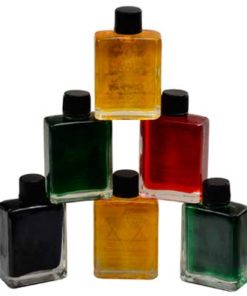
Honeysuckle oil (Espiritu blend), available in 2 dram, 1 oz and 16 oz bottles.
Did You Know?
Woodbine, the old English name for honeysuckle, appears in the fairy bower of a famous Elizabethan comedy set in an enchanted wood.
| Weight | N/A |
|---|---|
| Size | 2 dram, 1 oz, 16 oz |
Related products