

A seated figure with stag’s antlers, a torc in one hand and a ram-headed serpent in the other, looks out from the silver of the Gundestrup cauldron. Modern witches see in him their Horned God.
Origin & Traditional Use
In Wicca the Horned God is the consort of the Goddess, the god of forest, beasts, the hunt, death and rebirth, often identified with Cernunnos, Pan or Herne. The idea was shaped by Margaret Murray’s 1931 book The God of the Witches and became central to Gerald Gardner’s Wicca. Horned God oil is a modern blend made for his worship.
Uses by Tradition
Witchcraft & Folk Magick
- Sabbats: anoint the altar candle and the athame at Beltane, Lughnasadh and Samhain, the festivals most tied to the God.
- Virility and passion: dress a red or green candle for lust and vitality workings.
- Protection: anoint an antler or horn and hang it above the door.
Ceremonial & Occult Magick
- God-form work: anoint the brow before the priest invokes the God into himself.
- Consecration: anoint the athame or wand, tools of the God in Wiccan ritual.
A Simple Working
- Set an antler or horned image of the God on your altar.
- Anoint a green candle with Horned God oil.
- Light it and call on the God of the wild places.
- Anoint your brow, breastbone and both palms.
- Ask for the strength or vitality you need, plainly and briefly.
- Let the candle burn out and leave an offering of red wine or bread outdoors.
Pairs Well With
- Goddess oil: for rites honouring the God and Goddess together.
- A green candle: for forest and growth work.
- Pine incense: a resinous forest scent for his rites.
- Antler: a natural altar focus.
Lore & History
The Gundestrup cauldron, a silver vessel of the first or second century BCE, was found in a peat bog in Denmark in 1891. The only ancient inscription naming Cernunnos is on the Pillar of the Boatmen, a Roman-era monument from Paris. Murray’s theory of a surviving horned-god witch cult is rejected by historians, but it gave Wicca its God. The oil is modern.
What You Receive
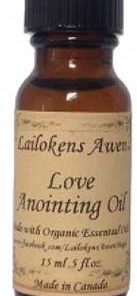
Horned God oil, available in 2 dram, 1 oz and 16 oz sizes.
Did You Know?
The Pillar of the Boatmen was found in 1710 beneath the choir of Notre-Dame de Paris.
| Weight | N/A |
|---|---|
| Size | 2 dram, 1 oz, 16 oz |
Related products