Imbolc Sabbat Candle
$17.55
Brigid’s Light at Winter’s End
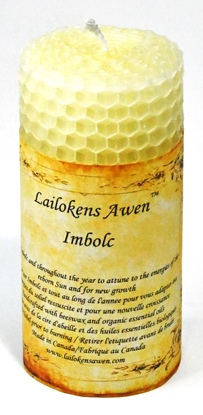
A white beeswax pillar anointed with Imbolc oil and made on the day of Imbolc, for welcoming the returning sun and the first stirrings of spring.
Quick Uses
- Brigid’s Flame: Light it on the eve of February 1st to welcome Brigid into the house.
- New Growth: Burn it over seeds or plans you want to start this year.
- Spring Cleansing: Light it after a thorough cleaning of the home at winter’s end.
How to Use It
Witchcraft & Folk Magick
- Light it on Imbolc Eve and lay a strip of cloth outside overnight for Brigid to bless as a brat Bríde.
- Set it beside a Brigid’s cross you have woven and keep the flame burning through the evening.
Hoodoo & Rootwork
- Burn it after washing the floors with a cleansing wash, to fill the clean house with new light.
- Light it over a petition for a fresh start in health, work or study.
Ceremonial & Occult Magick
- Use it as the light for a dedication or initiation, since Imbolc is a traditional time for vows.
- Burn it while you write poetry or study, in honour of Brigid as patron of poets and smiths.
A Simple Working
- On the eve of Imbolc, clean your altar and lay a white cloth.
- Set the candle in the centre with a small bowl of milk beside it.
- Light the candle and say, “Brigid, you are welcome here.”
- Hold a few seeds and name what you want to begin growing this year.
- Leave the milk outside overnight as an offering.
- Plant the seeds once the ground warms, and relight the candle when you do.
Pairs Well With
- Brigid’s Cross: The traditional rush cross hung for her protection.
- Milk: A classic Imbolc offering left out for Brigid.
- Clear Quartz: A bright stone for the returning light.
- Spring Equinox Altar Candle: To follow the wheel of the year into spring.
What You Receive
One white beeswax pillar candle, 4″ x 1 3/4″, anointed with Imbolc anointing oil and made on the day of Imbolc. Colour may vary slightly between batches.
Origin & Lore
Imbolc began as a Gaelic festival on February 1st marking the start of spring and the lambing season. It is closely tied to Brigid, a goddess of poetry, smithcraft and healing waters who became Saint Brigid of Kildare.
Irish families wove crosses from rushes on the eve of her feast and hung them over doors to protect the house. A strip of cloth, the brat Bríde, was left outside overnight for the saint to bless, and nuns at Kildare tended a sacred flame in her honour for centuries.
Did You Know?
A perpetual flame for Saint Brigid was kept at Kildare for centuries, and it was relit in 1993 by the Brigidine Sisters.
Related products