



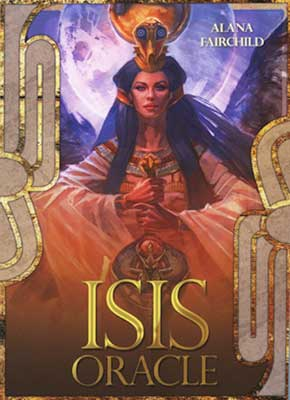
Isis Oracle by Alana Fairchild
$28.55
Oracle Of The Great Goddess
A 44-card oversized oracle of the Egyptian goddess Isis, with a ritual for every card, used by those who work with her as priestess, healer and mistress of magick.
Quick Uses
- Devotional Reading: Draw a card at an Isis altar and perform the ritual given for it.
- Guided Meditation: Use the guidebook’s meditations to work through a card’s message.
- Dark Times: Read when you are going through struggle and want guidance toward light.
- Daily Card: Pull one card a day and keep it beside a candle for the goddess.
How to Use It
Witchcraft & Folk Magick
- Set a drawn card on the altar with a blue or white candle and an offering of water.
- Read on the full moon, which many devotees associate with Isis.
Ceremonial & Occult Magick
- Use the card rituals as short ceremonial workings within an Egyptian-style temple practice.
- Pair a reading with the vowel chants or invocations you already use for the Egyptian gods.
Demonology & Black Magick
- Read before an invocation to ask whether Isis, or another spirit of the Egyptian current, is receptive.
- Ask the goddess to answer through a single card after an offering, and keep her reply in your records.
- Draw to choose which divine or spirit name to call on in a working of power or protection.
A Simple Working
- Set up a small altar with a white candle, a bowl of water and a little myrrh on charcoal.
- Call on Isis by name and offer the water.
- Shuffle the oversized cards slowly and ask what she would have you know.
- Draw one card and read its message in the guidebook.
- Perform the ritual or meditation given for that card.
- Leave the water overnight, then pour it out on living ground.
Pairs Well With
- Myrrh resin: used in ancient Egyptian temple incense.
- White pillar candle: for an ongoing devotional flame.
- Lapis lazuli: a stone prized in ancient Egypt and often used in goddess work.
- Offering bowl: for water and other gifts to the goddess.
What You Receive
One oracle deck of 44 oversized cards with a 220-page illustrated guidebook.
Origin & Lore
Oracle decks have no fixed structure and are built around a theme; here the theme is Isis, the Egyptian goddess of magick, healing and motherhood, who in myth gathered and restored the scattered body of Osiris.
Her worship spread far beyond Egypt across the Greek and Roman world, where she had temples and an initiatory mystery cult. The guidebook gives each card a ritual, many of them guided meditations, to work with her teachings.
Did You Know?
The fullest ancient account of initiation into the mysteries of Isis survives in Book XI of Apuleius’s Latin novel The Golden Ass, written in the second century AD.
| Weight | 1.2 lbs |
|---|
Related products

Altar Supplies


Crystal Balls
