



When nothing goes right and it seems to happen in a pattern, hoodoo calls it being jinxed or crossed, and it has a whole family of oils for breaking it.
Origin & Traditional Use
Jinx Breaker is a named condition oil in the hoodoo uncrossing tradition, used to break a run of bad luck, remove crossed conditions and open blocked roads. It is often used in baths and with white candles before protection work.
Uses by Tradition
Hoodoo & Rootwork
- Add to a cleansing bath, washing downward from head to feet, and throw the water out at a crossroads.
- Dress a white candle and burn it for seven days to break a jinx.
- Anoint the corners of a doorway after a cleansing floor wash.
Witchcraft & Folk Magick
- Dress a white candle on the waning moon to cut ties to bad luck.
- Anoint a cord and cut it to symbolise breaking a pattern.
Ceremonial & Occult Magick
- Anoint the brow before a cleansing or banishing ritual.
- Anoint a candle inscribed with the seal of the Sun to lift heaviness and restore good fortune.
A Simple Working
- Run a warm bath and add a handful of salt and a few drops of the oil.
- Light a white candle anointed with the oil beside the bath.
- Wash yourself downward, from head to feet, while saying the jinx is broken.
- Save a cup of the water before you get out.
- Air-dry, then throw the saved water out at a crossroads or toward the sunrise.
- Walk away without looking back.
Pairs Well With
- Hyssop, the classic uncrossing herb from Psalm 51.
- Sea salt, for cleansing baths.
- A white candle, for purity and breaking crossed conditions.
- Black salt, to lay at the door after the jinx is lifted.
Lore & History
Uncrossing work is central to hoodoo, built on the belief that bad luck can be laid on a person by others or picked up from the world, and then washed or burned away.
Oils like Jinx Breaker became widely available through early twentieth-century spiritual supply houses, often sold with matching baths and candles.
What You Receive
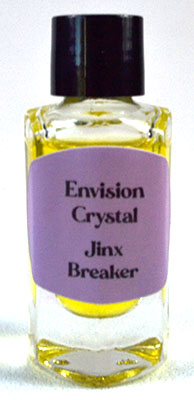
Jinx Breaker oil, in a 2 dram bottle.
Did You Know?
The word jinx is often traced to the wryneck bird, iynx in Greek, which was tied to a spinning wheel in ancient love charms.
| Weight | 0.15 lbs |
|---|
Related products


