


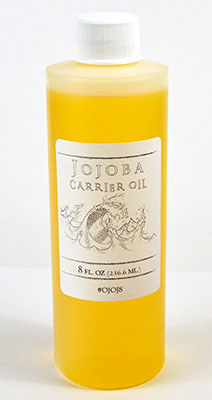

Jojoba carrier oil
$34.05
A base for blending your own oils
A jojoba seed carrier oil used as the base for blending your own ritual and anointing oils, prized because it keeps well.
Quick Uses
- Blending: use as the base for your own blends, adding essential oils or herbs for a specific intention.
- Infusing: infuse dried herbs in jojoba over a full moon cycle to make a custom anointing oil.
- Diluting: dilute strong formula oils before wearing them on the skin.
- Consecration: blend with frankincense or myrrh to make an anointing oil for consecrating tools.
How to Use It
Witchcraft & Folk Magick
- Use as the base for your own blends, adding essential oils or infused herbs for a specific intention.
- Infuse dried herbs in jojoba over a full moon cycle to make a custom anointing oil.
- Anoint the body for ritual or glamour work, alone or blended.
Hoodoo & Rootwork
- Dilute strong formula oils for wearing on the skin.
- Use as the base for homemade condition oils with roots or herbs added to the bottle.
Ceremonial & Occult Magick
- Blend with frankincense or myrrh to make an anointing oil for consecrating tools.
- Prepare the base of a planetary oil on the correct day and hour.
A Simple Working
- Choose your intention and the herbs or essential oils that match it.
- Pour a small amount of jojoba carrier oil into a clean glass bottle.
- Add a pinch of dried herb or a few drops of essential oil.
- Hold the bottle in both hands and speak your intention.
- Seal the bottle and leave it on your altar for seven days, shaking it daily.
- Label the bottle and use it to dress candles and charms.
Pairs Well With
- Frankincense, for consecration oils.
- Rose petals, for love blends.
- Rosemary, for protection and memory blends.
- Amber glass bottles, for storing your blends.
What You Receive
Jojoba carrier oil, extracted from the seeds of the jojoba plant, in an 8 oz bottle.
Origin & Lore
Jojoba carrier oil comes from the seeds of Simmondsia chinensis, a shrub of the Sonoran Desert of Mexico and the American Southwest. Indigenous peoples of the region used jojoba seeds and their oil, and in magick it is used as a neutral carrier for blending herbs, essential oils and condition oils.
Jojoba oil is not really an oil at all but a liquid wax, which is why blends made with it stay fresh far longer than most.
Indigenous peoples of the Sonoran Desert used jojoba seeds as food and the oil as a salve for skin and hair. Jojoba became widely known in the 1970s as a substitute for sperm whale oil in cosmetics and industry.
Did You Know?
Jojoba’s scientific name, Simmondsia chinensis, is a mistake: the botanist Johann Link misread a label marked “Calif” as “China”, even though the plant has never grown wild there.
| Weight | 0.7 lbs |
|---|
Related products


