



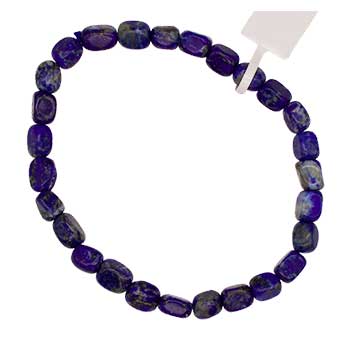

Lapis Lazuli Nugget Bracelet
$8.75
Stone of Inner Truth
A lapis lazuli nugget bracelet in royal blue, worn by practitioners for insight, self-expression and opening toward the spirit world.
Quick Uses
- Insight: Wear it when you need to see a situation truthfully.
- Spirit Contact: Wear it on your left wrist during meditation or séance work.
- Speaking Out: Put it on before you share your own truth.
- Study: Wear it while learning occult texts or symbols.
How to Use It
Witchcraft & Folk Magick
- Charge it under a starry sky and wear it during divination.
- Lay it on your book of shadows while writing new workings.
- Wear it during spellwork for honest self-expression, especially for writers and speakers.
Hoodoo & Rootwork
- Keep it on the ancestor altar beside a glass of water and wear it when asking for messages in dreams.
- Dab a psychic vision oil on the wrist before reading for others.
- Carry it in a blue flannel bag with a little dried rosemary for clear thought before study or exams.
Ceremonial & Occult Magick
- Wear it during Jupiterian workings for wisdom and rightful authority.
- Use it as a focus for pathworking and visions of higher spheres.
Demonology & Black Magick
- Wear it during spirit contact to keep your inner sight open.
- Offer it as a gift of royal blue to a spirit of knowledge when asking for teaching.
- Wear it while drawing a spirit’s seal, to keep your attention steady and your inner sight clear.
A Simple Working
- Set a dark blue candle on a heatproof dish.
- Lay the bracelet around it and place a notebook nearby.
- Light the candle and ask one clear question about your path.
- Hold the bracelet and sit in silence for ten minutes.
- Write any impressions that come.
- Wear the bracelet as you go about the rest of your day.
Pairs Well With
- Blue Candles: Lights for wisdom and spiritual sight.
- Frankincense: A classic resin for raising consciousness during visions.
- Journal: For recording insights received.
- Labradorite: Adds intuitive flashes to lapis’s depth.
What You Receive
One nugget beaded bracelet of lapis lazuli.
Origin & Lore
Lapis lazuli was one of the most prized stones of the ancient world, worn by royalty and priests as a stone of truth and divine favour. In the Sumerian myth of Inanna’s descent, the goddess carries a lapis measuring rod and line.
It was inlaid into Egyptian treasures including Tutankhamun’s funerary mask, and ground into ultramarine, the costly blue pigment used by Renaissance painters for the robes of the Virgin. Its name joins the Latin lapis, stone, with a Persian word for blue.
Did You Know?
Ultramarine pigment was made by grinding lapis lazuli, and was once more costly than gold in Renaissance Europe.
Related products


