



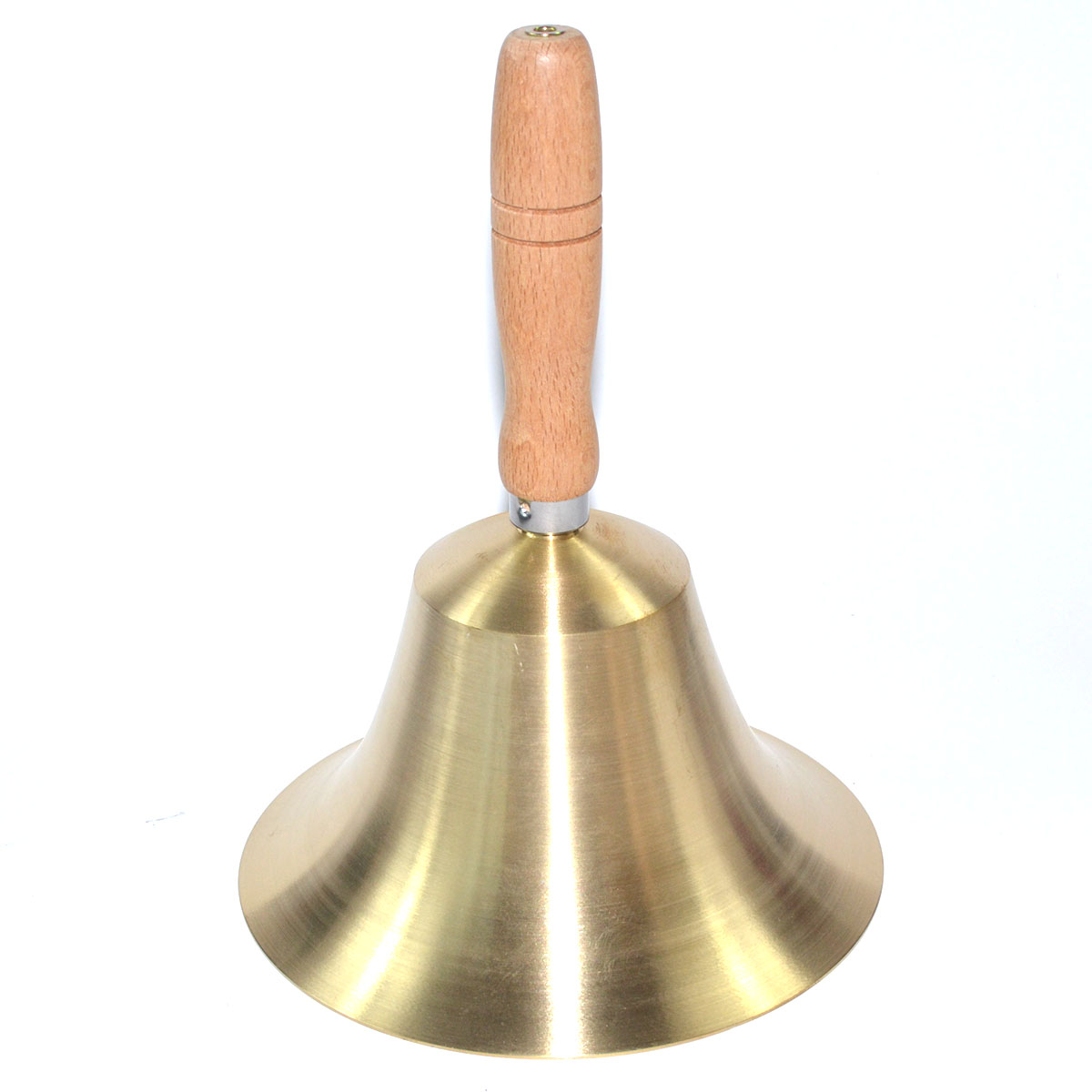
Large Brass Hand Bell with Wooden Handle (6 1/2″ x 9″)
$73.65
A Commanding Temple Bell
A large brass hand bell with a wooden handle and a deep, carrying voice, made for group rites, temples and serious clearing work.
Quick Uses
- Temple Bell: Ring it to call a coven or group to the circle.
- Whole-House Clearing: Ring it in the centre of the home and let the tone fill every room.
- Sabbat Herald: Ring it at the opening of each sabbat celebration.
- Ritual Authority: Sound it when you speak the binding words of a rite.
How to Use It
Witchcraft & Folk Magick
- Ring it at the start of a coven gathering to draw everyone into sacred time.
- Ring it at sunrise on the solstice to welcome the turning of the year.
Ceremonial & Occult Magick
- Use it as the temple bell for formal lodge-style rites and processions.
- Ring it before reading a long invocation so the room falls silent and attentive.
Demonology & Black Magick
- Use its deep tone at the opening of a full evocation to declare the temple ready and the operator present.
- Ring it nine times to dismiss a stubborn spirit at the close of a working, speaking the license to depart between strokes.
A Simple Working
- Choose a sabbat or full moon for a full house blessing.
- Set a white pillar candle and a bowl of water with a pinch of salt in the centre of your home.
- Light the candle and ring the bell nine times, slowly.
- Dip your fingers in the salt water and mark each door with a small cross or pentagram.
- Return to the centre and ring nine more times.
- Speak a blessing over the home and everyone who lives in it.
- Leave the candle to burn for an hour, then snuff it and keep it for the next blessing.
Pairs Well With
- White Pillar Candles: For long blessing rites.
- Sea Salt: For salt water to bless doors and windows.
- Frankincense and Myrrh Incense: The classic temple incense.
- Altar Cloth: A fitting resting place for a large bell.
What You Receive
One large brass hand bell with a smooth wooden handle, measuring 6 1/2″ x 9″.
Origin & Lore
A large hand bell like this was made to gather people for worship and to clear sacred spaces with sound. Temple bells have called worshippers and marked holy moments in East and West for thousands of years.
In Tibetan Buddhism the hand bell, or ghanta, is paired with the vajra and stands for wisdom. In the West, town criers and church sextons carried large hand bells through the streets, and their sound was thought to keep the night’s evil at bay.
Did You Know?
In Tibetan ritual the hand bell is always paired with the vajra, the bell standing for wisdom and the vajra for method.
Related products


