



Across Germany and Central Europe the village linden was where courts sat, couples danced and oaths were sworn, its honey scent hanging over all of it.
Origin & Traditional Use
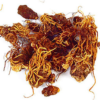
Linden flowers are the honey-scented blossoms and pale, wing-like bracts of Tilia trees, native across Europe. Gathered in early summer and dried, they were traditionally used in a calming tea and for colds.
The soft wood was favoured by carvers, and the inner bark was made into rope and matting.
Uses by Tradition
Witchcraft & Folk Magick
- Peace and sleep: mix with lavender in a pillow or sachet for quiet nights and a calm household.
- Love: add to love sachets and baths, a use given in herbals of magick.
- Protection: hang a linden sprig or a small bag of flowers over the door to guard the home.
- Court and oaths: some practitioners carry a pinch when facing a judgement, a modern use that draws on the old court lindens.
A Simple Working
- Gather linden flowers, lavender and a small blue cloth bag.
- Mix them together with your hands in a bowl.
- Speak the peace you want for the room or the people who sleep there.
- Fill the bag and tie it shut with three knots.
- Hang it at the bedhead or over the bedroom door.
- Refresh it each month and return the old flowers to the earth.
Pairs Well With
- Lavender: for peace and sleep.
- Chamomile: softens tempers.
- Rose petals: for love sachets.
- Lemon balm: lifts a heavy household.
- Blue chime candle: for peace and harmony.
Lore & History
In German-speaking lands a Gerichtslinde, or court linden, stood in many villages, and justice was given beneath it. The tree is also a national emblem of the Czech Republic.
In Ovid’s Metamorphoses, the faithful old couple Baucis and Philemon are granted their wish to die together and become a linden and an oak growing side by side.
What You Receive
Cut dried linden flowers, available in 1 oz and 2 oz.
Did You Know?
The British call linden trees lime trees, though they have nothing to do with the citrus; the name comes from the Old English lind.
| Weight | N/A |
|---|---|
| Size | 1 oz, 2 oz |
Related products


