

A lodestone pulls iron toward itself with no help at all, and folk magick has never let a power like that go unused.
Origin & Traditional Use
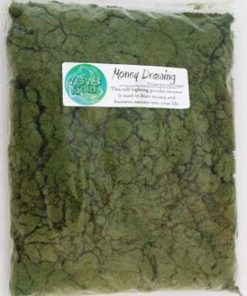
Lodestone is naturally magnetised magnetite. In hoodoo it is the drawing stone par excellence, kept in pairs for love, carried for money and luck, and ‘fed’ with magnetic sand. This powder incense is a condition formula named for that drawing power, burned on its own to add smoke to lodestone and attraction work.
Uses by Tradition
Hoodoo & Rootwork
- Feeding lodestones: smoke your stones over the burning powder before sprinkling them with magnetic sand.
- Money drawing: burn during a green candle working with a lodestone sitting on a dollar bill.
- Love pairs: smoke a matched pair of lodestones together, named for you and your partner.
Witchcraft & Folk Magick
- Attraction: burn on a waxing moon while stating clearly what you want drawn to you.
- Customers: burn in a shop or workspace to pull business through the door.
A Simple Working
- Place a lodestone on a folded dollar bill.
- Pour a small cone of the powder into a heat-proof bowl and light it.
- Hold the stone in the smoke and tell it what to draw.
- Sprinkle a pinch of magnetic sand over the stone.
- Wrap the bill around the stone.
- Keep it in a red or green bag in your wallet or till.
Pairs Well With
- Lodestones: the stones this formula is built around.
- Magnetic sand: for feeding the stones after smoking them.
- A green chime candle: for money drawing.
- A red flannel mojo bag: to carry the fed stone.
Lore & History
Pliny the Elder repeated the tale of a shepherd named Magnes whose iron-nailed boots and staff stuck to the rocks of Mount Ida, the discovery of the magnetic stone. In conjure, lodestones are treated as living things, given names, fed and kept in pairs.
What You Receive
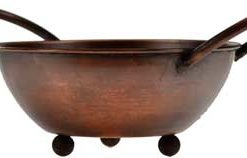
Self-lighting powder incense, burned directly in a heat-proof bowl or cauldron without charcoal. Available in 1 oz and 1 lb.
Did You Know?
‘Lode’ is an old English word meaning ‘way’ or ‘course’: a lodestone is a ‘way-stone’, named for its use in early compasses.
| Weight | N/A |
|---|---|
| Size | 1 oz, 1 lb |
Related products