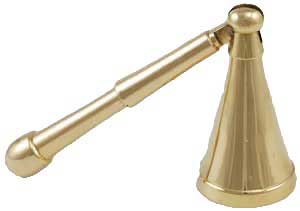
Long-Belled Brass Candle Snuffer
$9.85
Close the flame without breaking the spell
A compact brass snuffer with a deep bell for reaching down into tall holders.
Quick uses
- Closing: snuff the altar candle at the end of a working instead of blowing it out.
- Deep holders: reach into glass vigils and deep candle cups.
- Small altars: a slim tool that fits a crowded working space.
How to Use It
Witchcraft & Folk Magick
- The snuffer’s first purpose is plain: to put out a flame cleanly, without spattering wax or scattering ash across the altar.
- Many witches hold that blowing on a ritual candle disperses the work or insults the fire spirit, so the flame is covered and closed instead.
- Use it to pause a multi-night candle spell, snuffing each evening and relighting the next, so the working is held rather than ended.
Ceremonial & Occult Magick
- In ceremonial practice the lights are extinguished in a fixed order when the temple is closed; a dedicated snuffer keeps that act deliberate.
- Consecrate it with the other altar tools so that nothing profane touches the sacred flame.
Demonology & Black Magick
- When a spirit has been called to a candle, snuff the flame as part of the licence to depart, speaking the dismissal as the light goes out.
- Keep one snuffer only for baneful work so that hexing fires and blessing fires never share a tool.
A Simple Working
- At the end of your working, speak your closing words over the candle.
- Lower the bell slowly over the flame and hold it a moment until the light is gone.
- Say: “The fire rests, the work remains.”
- Lift the snuffer away and leave the candle to cool where it stands.
- Relight it the next night at the same hour to continue the spell.
Pairs Well With
- Chime candles: short spell candles often worked over several nights.
- Glass vigil candles: the long bell reaches down inside the jar.
- Anointing oil: to dress the candle before each relighting.
- Altar cloth: to keep your tools together in one sacred space.
- Matches kept for ritual: so the lighting and the closing are both deliberate.
What You Receive
One brass candle snuffer with an extended bell. Handle 3″, bell 2″.
Origin & Lore
Candle snuffing is bound up with the old belief that a flame carries the breath of the working. Blowing it out was held to blow the intention away, or to offend the spirit housed in the fire.
Church and temple alike keep their lights with a snuffer, and the habit passed easily into folk and ceremonial altars.
Did You Know?
Before self-trimming braided wicks became common in the early 19th century, “snuffers” were scissor-like tools for trimming the charred wick, not for putting the flame out.
Related products