Lughnasadh Altar Candle
$17.55
Reap What You Have Sown
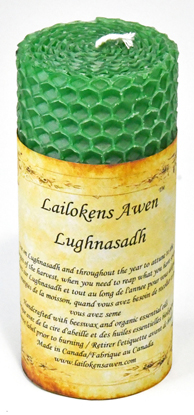
A green beeswax pillar anointed with Lughnasadh oil and made on the day of Lughnasadh, for the first harvest and for gathering in the rewards of your work.
Quick Uses
- First Harvest: Light it on August 1st beside a loaf of bread from the new grain.
- Rewards: Burn it over a list of what you have worked for and want to see come in.
- Skill Spells: Light it when you need your talents recognised.
How to Use It
Witchcraft & Folk Magick
- Bake or buy a fresh loaf and break it beside the lit candle, leaving the first piece outside as an offering.
- Burn it while you weave a small corn dolly from wheat stalks to keep until next year.
Hoodoo & Rootwork
- Set a petition for a raise or payment owed beneath it and burn it on a Thursday.
- Sprinkle a little money drawing powder around its base to call in what you are owed.
Ceremonial & Occult Magick
- Light it in honour of Lugh, the god of many skills, before learning a new craft.
- Use it as the altar light for a ritual reviewing the year’s goals and harvest.
Demonology & Black Magick
- Burn it while you settle a debt or pay an offering to a spirit who has helped you, closing the bargain cleanly.
- Light it over a sigil made for reward and recognition before you burn the sigil.
A Simple Working
- On Lughnasadh, set the candle on your altar with a fresh loaf of bread.
- Write a list of the work you have put in this year.
- Light the candle and read the list aloud.
- Name what you wish to harvest from that work.
- Break off the first piece of bread and set it outside for the spirits of the land.
- Keep the list under the candle and relight it until the harvest comes in.
Pairs Well With
- Wheat Stalks: For weaving a corn dolly or decorating the altar.
- Money Drawing Powder: To call in payment and reward.
- Green Aventurine: A stone of luck and growing fortune.
- Autumn Equinox Altar Candle: For the second harvest that follows.
What You Receive
One green beeswax pillar candle, 4″ x 1 3/4″, anointed with Lughnasadh anointing oil and made on the day of Lughnasadh. Colour may vary slightly between batches.
Origin & Lore
Lughnasadh was originally a Gaelic harvest festival on August 1st marking the start of the grain harvest. Irish legend says the god Lugh founded it in honour of his foster mother Tailtiu, who died after clearing the plains of Ireland for farming.
It was celebrated with fairs, games, matchmaking and trial marriages, and the great Tailteann Games were held at Teltown in County Meath. In England the same day was Lammas, from the Old English for loaf mass, when bread from the first wheat was blessed in church.
Did You Know?
The English name Lammas comes from the Old English hlafmaesse, meaning loaf mass.
Related products