



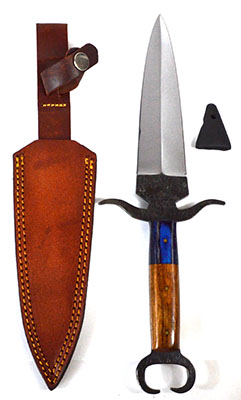
Manta Athame (13″)
$47.25
Iron Guarded, Wood Hilted
A long athame with an iron guard and pommel and a colour-blended wood hilt, so each one looks a little different, for witches who want a substantial blade for formal circle work.
Quick Uses
- Circle Casting: Cast large circles with this long blade for group work.
- Fairy Ward: Use its iron fittings as a ward against unwanted fey.
- Banishing Blade: Trace banishing pentagrams with its reach and weight.
- Altar Centrepiece: Display it across your altar as the main ritual blade.
How to Use It
Witchcraft & Folk Magick
- Cast a wide circle for a coven or group, holding the long blade at arm’s length.
- Lay it across your doorstep at night when you sense unwelcome fey activity.
Ceremonial & Occult Magick
- Use it as your principal ritual blade, dedicated to the element of fire.
- Trace each banishing pentagram slowly, letting the blade’s length make the figures large and clear.
Demonology & Black Magick
- Draw the circle of evocation with this long blade so the boundary is wide and firmly marked.
- Point it at a spirit’s sigil as you deliver its charge and do not lower it until the spirit agrees.
A Simple Working
- Choose a full moon to dedicate the blade.
- Light a white pillar candle on your altar.
- Pass the athame slowly through the heat of the flame.
- Sprinkle it with salt water and pass it through frankincense smoke.
- Breathe on the blade and name its purpose.
- Cast a circle around your altar with it for the first time.
- Wrap it in cloth and keep it on your altar.
Pairs Well With
- White Pillar Candles: For dedication and long ritual.
- Frankincense Resin: For blessing the blade.
- Sea Salt: For salt water consecration.
- Altar Cloth: To display a long blade.
What You Receive
One 13″ Manta athame with an iron guard and pommel and a wooden hilt showing natural wood grain blended with colour, so each piece is one of a kind.
Origin & Lore
Long ritual blades were made to cast the circle and command spirits, a tradition rooted in the swords and knives of the grimoires. Its iron fittings add a second, older layer of protection.
Across Celtic and Germanic folklore, iron was believed to repel fairies, witches and malevolent spirits. Horseshoes over doors, iron nails in cradles and knives under thresholds were all used as wards, a belief that may reach back to the arrival of iron tools in the Iron Age.
Did You Know?
Folklore held that fairies could not abide iron, which is why horseshoes and nails were used as household wards.
Related products


