



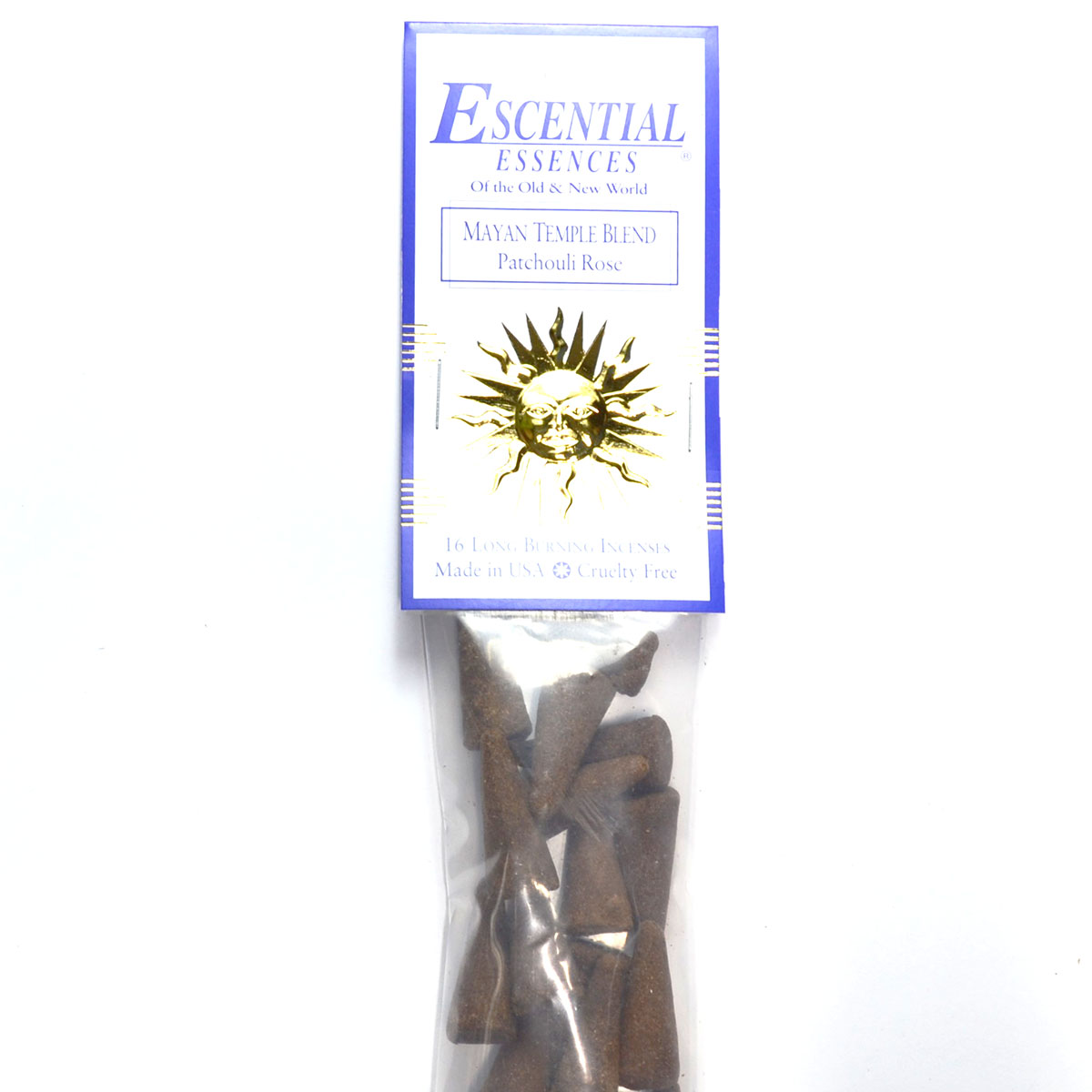
Mayan Temple Incense Cones
$6.55
Secrets of Lost Arts
A patchouli rose cone blend made for discovering the secrets of lost arts and reaching the astral planes.
Quick Uses
- Occult Study: Burn a cone when studying old grimoires and esoteric texts.
- Astral Journey: Light one before you lie down for astral travel or pathworking.
- Ancestral Wisdom: Burn one when asking the old ones for knowledge.
How to Use It
Witchcraft & Folk Magick
- Burn one while you read and copy spells into your book of shadows, asking to remember them.
- Light a cone during a meditation where you picture a temple and walk through its doors.
Hoodoo & Rootwork
- Burn it beside an ancestor altar when you ask an elder in spirit to teach you a lost family practice.
- Light a cone while you study and write out a working before doing it.
Ceremonial & Occult Magick
- Use it during pathworking on the Tree of Life, especially paths linked to hidden knowledge.
- Burn a cone while you scry for lost knowledge, recording what you see.
Demonology & Black Magick
- Burn it when evoking spirits said to teach the arts and sciences, a common office of goetic spirits.
- Light one while you meditate on a spirit’s sigil to receive knowledge from it.
A Simple Working
- On a Wednesday evening, sit at a table with a notebook and pen.
- Light a purple chime candle and a Mayan Temple cone.
- Write one question about a practice or art you want to learn.
- Close your eyes and picture a stone temple with a staircase leading up.
- Climb it in your mind and ask the question at the top.
- Write down whatever words or images come.
- Snuff the candle when the cone burns out.
Pairs Well With
- Purple Chime Candles: For psychic and spiritual work.
- Copal Resin: The traditional temple incense of the Maya.
- Journal: To record what you learn.
- Obsidian: A stone of the Americas for scrying.
What You Receive
One package of 16 long-burning Mayan Temple (patchouli rose) scented incense cones, made in the USA from cruelty-free, cosmetic-grade ingredients.
Origin & Lore
This patchouli rose blend is made for seeking the secrets of lost arts and the astral planes. Its name honours the temples of the ancient Maya, who burned incense as a central part of worship.
The traditional Maya incense was copal, called pom, a tree resin offered to the gods in temples and caves. The K’iche’ Maya book the Popol Vuh speaks of burning pom as an offering, and Maya communities still burn copal in ceremonies today.
Did You Know?
Maya communities in Guatemala and Mexico still burn copal at shrines, caves and churches today.
Related products


