

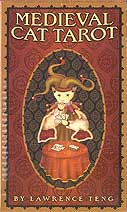

Medieval Cat Tarot by Pace & Teng
$24.14
Feline Tarot, Medieval Style
A 78-card tarot of aristocratic medieval cats with a dash of humour, kept by readers who love cats and a traditional structure in the same deck.
Quick Uses
- Daily Draw: Pull one card each morning for a light, honest read on the day.
- Familiar Work: Read with your cat nearby and note which card it paws or sits on.
- Learning Deck: Its traditional structure makes it easy to study with any tarot book.
- Ward Card: Set a protective card by the door with a sprig of catnip.
How to Use It
Witchcraft & Folk Magick
- Read with your familiar in the room and treat any card it disturbs as significant.
- Lay a card in a protection sachet with catnip and salt.
Ceremonial & Occult Magick
- Read the suits by their traditional elements and the trumps by their astrological correspondences.
- Use a court card as a focus for meditation on the qualities you wish to build.
Demonology & Black Magick
- Read before and after a working to check the presence and mood of what was called.
- Ask a familiar spirit to choose a card in reply to your question and record it in your grimoire.
- Lay a chosen card under a black candle as the focal image of a binding or banishing working.
A Simple Working
- Light a white chime candle and set a pinch of catnip beside it.
- Invite your cat, or call on your familiar spirit, to sit with you.
- Shuffle and draw three cards for the morning, afternoon and evening ahead.
- Read each card and note one thing to watch for.
- Offer the catnip to your cat, or leave it on the altar for your familiar.
- Record the reading and check it against the day that night.
Pairs Well With
- Catnip: a herb associated with cat magick and familiars.
- White chime candles: for simple daily readings.
- Tiger’s eye: a cat-eyed stone kept with feline decks.
- Tarot bag: to keep the deck safe between readings.
What You Receive
One tarot deck of 78 cards with an instructional booklet.
Origin & Lore
Tarot was first a card game of the Italian Renaissance courts, and medieval and early Renaissance imagery still shapes the trumps today. Divination with the cards took hold in France from the 1780s.
This deck dresses the full 78-card structure in medieval costume with cats in every role. Cats themselves have a long magickal history, from the cat goddess Bastet in Egypt to the familiars of European witch lore.
Did You Know?
The earliest Italian records call the cards carte da trionfi, ‘cards of the triumphs’; the word tarocchi does not appear until the early 1500s.
| Weight | 0.6 lbs |
|---|
Related products

Crystal Balls