Money Manifest Smudge Kit
$8.75
Clear the Path to Prosperity
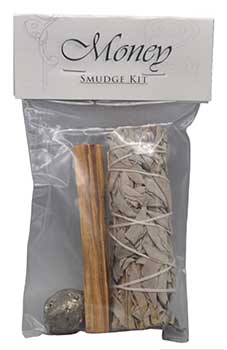
A smudge kit of white sage, palo santo and a pyrite stone, used to clear stuck money energy and invite abundance.
Quick Uses
- Clear Blocks: Smudge your wallet, desk or shop with sage.
- Call Abundance: Light palo santo as you name your goals.
- Carry Pyrite: Keep the stone in your wallet or by the till.
How to Use It
Witchcraft & Folk Magick
- Smudge your purse or wallet with sage at the new moon and put the pyrite inside.
- Set the pyrite on a green cloth with coins and light palo santo beside it on Thursdays.
Hoodoo & Rootwork
- Smudge your business with sage before opening, then dress the pyrite with money oil and set it by the register.
- Add the pyrite to a green mojo bag after a sage cleansing.
Ceremonial & Occult Magick
- Purify a Jupiter talisman with sage and charge it with palo santo smoke in the hour of Jupiter.
- Set the pyrite in the north of your temple as a sign of earthly wealth.
Demonology & Black Magick
- Offer palo santo smoke and the pyrite to a spirit of wealth during evocation.
- Clear the space with sage after a prosperity pact has been sealed.
A Simple Working
- On a Thursday, light the sage and smudge your wallet and workspace.
- Put out the sage and light the palo santo.
- Hold the pyrite in the smoke.
- Name the money you are working for.
- Set the pyrite on a dollar bill beside a green candle and let the candle burn.
- Carry the pyrite and bill together.
Pairs Well With
- Green Chime Candles: For money work.
- Money Drawing Oil: To dress the pyrite.
- Money Rice: For a money bowl.
- Abalone Shell: To hold the smoking sage.
What You Receive
One smudge kit containing a white sage smudge wand, a palo santo stick and a pyrite stone.
Origin & Lore
White sage, Salvia apiana, grows wild in southern California and northern Baja California and was used in ceremony by Native peoples of the region. Burning dried bundles of it became common in modern witchcraft and spiritual practice in the twentieth century. Palo santo, “holy wood,” is the wood of Bursera graveolens, a tree of South America in the same family as frankincense and myrrh. It has long been burned in the Andes and along the Pacific coast for cleansing.
Pyrite is nicknamed fool’s gold for its brassy shine. Its name comes from the Greek word for fire, because it throws sparks when struck against steel.
Did You Know?
Pyrite takes its name from the Greek word for fire, because it throws sparks when struck against steel.
Related products