


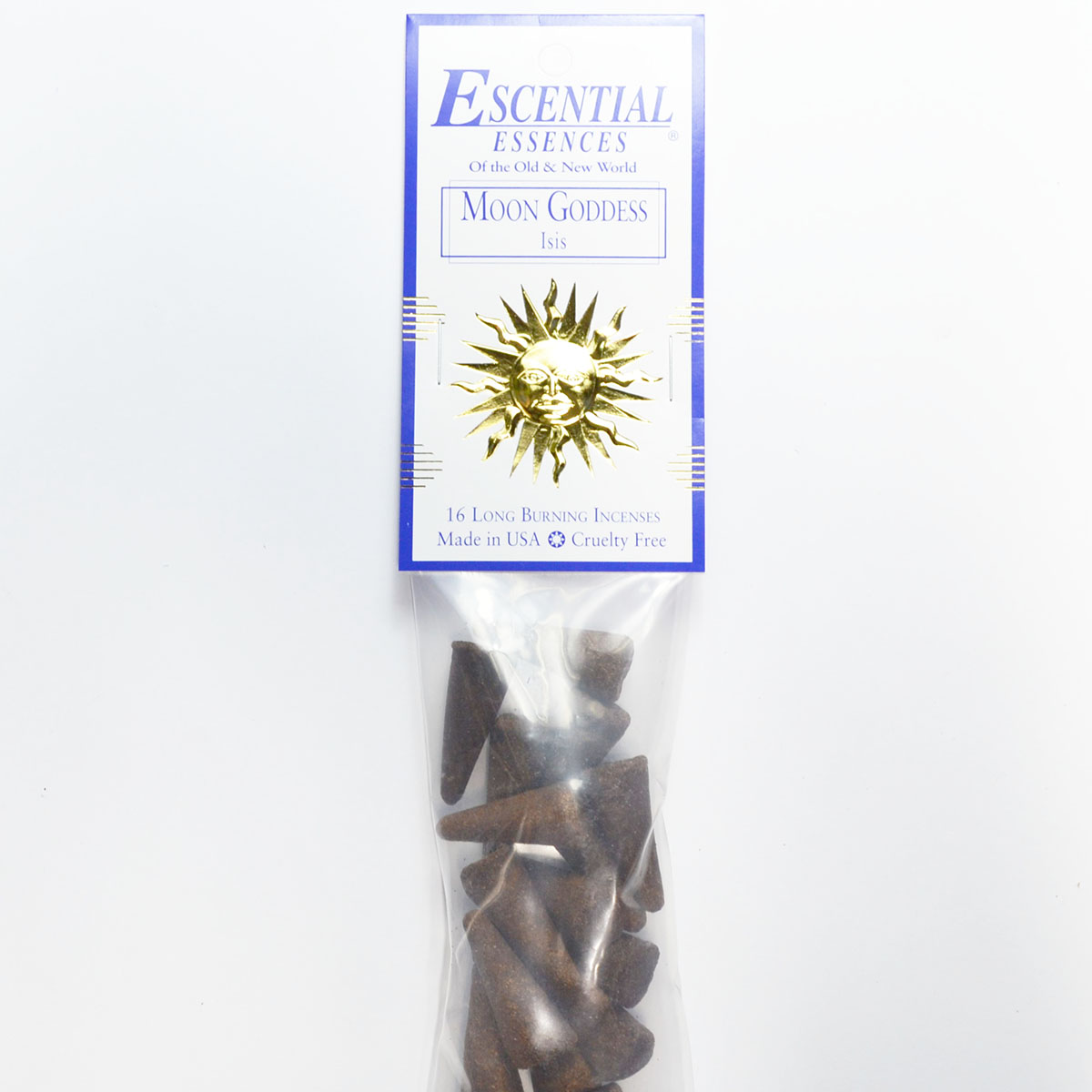

Moon Goddess incense
$6.55
Lunar smoke for Isis, Queen of Heaven · Available in 2 sizes
Moon Goddess incense honouring Isis as Queen of Heaven and lady of the moon, burned for lunar rites, divination, dreams and blessing.
Quick Uses
- Esbats: light a cone or stick as the full moon rises and invite Isis to the circle.
- Moon water: burn it beside a bowl of water set out under the full moon for later blessing and scrying.
- Dreams: burn a stick in the bedroom an hour before sleep, then put it out and keep a dream journal by the bed.
- Lunar operations: burn it on a Monday or in the hour of the Moon for divination and intuition.
How to Use It
Witchcraft & Folk Magick
- Full moon esbat: light a cone or stick when the moon rises and invite Isis to the circle as Queen of Heaven.
- Moon water: burn it beside a bowl of water set out under the full moon, and use the water afterwards for blessing and scrying.
- Dreams: burn a stick in the bedroom an hour before sleep, then put it out, and keep a dream journal by the bed.
Ceremonial & Occult Magick
- Lunar operations: burn it on a Monday or in the hour of the Moon for divination, intuition and dream work.
- Isis in the Golden Dawn: her sign forms part of the Golden Dawn’s LVX signs and the IAO formula (Isis, Apophis, Osiris); burn the incense when working that analysis.
A Simple Working
- On the night of the full moon, set a bowl of water where moonlight can reach it.
- Light a white or silver candle beside it.
- Light one Moon Goddess cone and set it in a dish next to the bowl.
- Gaze into the water and ask Isis to show you what you need to see.
- Note any images, words or feelings that come.
- When the cone is spent, bottle a little of the water for later blessings and pour the rest on the earth.
Pairs Well With
- Silver candle: for the moon and the goddess.
- Black scrying mirror: for lunar divination.
- Mugwort: a herb traditionally used for dreams.
- Moonstone: a lunar stone for the altar.
- Cone incense burner: to hold the cones.
What You Receive
Moon Goddess incense dedicated to Isis, available as a pack of 16 cones or a pack of 16 sticks.
Origin & Lore
Moon Goddess is a modern formula incense dedicated to Isis in her lunar aspect. Isis began as an Egyptian goddess of kingship, magick and devotion, wife of Osiris and mother of Horus, and in the Greco-Roman world she became a universal goddess linked with the moon and the sea. This incense is made for full moon rites, meditation and work under her name.
In Apuleius’ Golden Ass, a desperate man wakes on a beach under the full moon and prays to the Queen of Heaven. Isis rises from the sea to answer him, crowned with a disc that shines like the moon.
In Book 11 of Apuleius’ Metamorphoses (the Golden Ass), written in the second century CE, Isis describes herself as the one goddess worshipped under many names across the world. Her cult spread from Egypt across the Roman Empire, with temples as far as London, and her mysteries offered initiates a personal bond with her.
Did You Know?
The temple of Isis at Philae, in southern Egypt, was one of the last places where the old gods were worshipped, and was closed on the orders of the emperor Justinian in the sixth century.
| Weight | N/A |
|---|---|
| Option | 16 cones, 16 sticks |
Related products


