


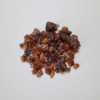

Myrrh granular resin
Price range: $2.15 through $16.45
The incense of the dead · Available in 4 sizes
Granular myrrh resin burned on charcoal, the incense of the dead, deep meditation and spiritual healing, and partner to frankincense.
Quick Uses
- Ancestors: burn it on the ancestor altar on anniversaries and at Samhain as an offering for the dead.
- Settling: burn it in a bedroom after a hard time as a slow, grounding smoke to settle the spirit.
- Consecration: mix with frankincense to consecrate tools, the frankincense for the sun and the myrrh for the deep.
- Lunar rites: burn it in rites of the Moon and the underworld and for the dark goddesses.
How to Use It
Witchcraft & Folk Magick
- Ancestor work: burn it on the ancestor altar on anniversaries and at Samhain, its dark, resinous smoke a traditional offering for the dead.
- Spiritual healing: burn it in a sickroom or a bedroom after a hard time, as a slow, grounding smoke to settle the spirit.
- Consecration: mix with frankincense to consecrate tools, the frankincense for the sun and the myrrh for the deep.
Ceremonial & Occult Magick
- Lunar and Saturnian rites: myrrh is used in rites of the Moon and of the underworld, and in many modern ritual systems for the dark goddesses.
- Anointing oil: myrrh is one of the ingredients of the holy anointing oil in Exodus 30, and magicians steep it in oil for their own versions.
Demonology & Black Magick
- Necromancy: myrrh is a standard incense in works of contact with the dead, burned at gravesides or in a darkened room while calling a spirit by name.
- It is often burned in goetic and infernal work to give the space weight and solemnity.
A Simple Working
- Set a photograph or name of an ancestor on a small table with a glass of water.
- Light a disc of charcoal and let it ash over.
- Drop a few grains of myrrh onto it.
- Light a white candle and say the ancestor’s name aloud three times.
- Speak to them plainly, as you would at their graveside.
- Sit until the myrrh has burned out, then pour the water onto the earth.
Pairs Well With
- Frankincense tears: the classic pairing, sun and shadow.
- Charcoal tablets: to burn the resin on.
- A white candle: for ancestor and spirit work.
- Graveyard dirt: for deeper work with the dead.
What You Receive
Myrrh resin in granular form for burning on charcoal, available in 1/3 oz, 1 oz, 1.6 oz and 1 lb.
Origin & Lore
Myrrh is the gum resin of Commiphora trees of Arabia and northeast Africa, gathered from cuts in the bark in the same way as frankincense. Its name comes from the Semitic word for bitter. It was used in ancient Egypt in embalming and temple incense, in perfumes and anointing oils across the Near East, and in Christian tradition as one of the gifts of the Magi.
Ovid tells that Myrrha, transformed into a tree, still weeps, and that her bitter tears are the resin that bears her name.
Herodotus describes Egyptian embalmers filling the body with pure ground myrrh, cassia and other spices before sewing it closed. In Ovid’s Metamorphoses, Myrrha is turned into a myrrh tree, and from its trunk the child Adonis is born. The Gospel of Mark says Jesus was offered wine mixed with myrrh at the crucifixion, and the Gospel of John that his body was wrapped with myrrh and aloes.
Did You Know?
Myrrh is a gum resin, part of it dissolving in water and part in alcohol, which is why it was so useful in both ancient perfumes and tinctures.
| Weight | N/A |
|---|---|
| Size | 1/3 oz, 1 oz, 1.6 oz, 1 lb |
Related products


