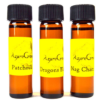
Myrrh oil
Price range: $6.55 through $12.05
The bitter resin of the Magi · Available in 2 sizes
Myrrh oil carries the bitter scent of the ancient gum resin of the Magi, worked for purification, exorcism, consecration and prayers for the dead.
Quick Uses
- Consecration: anoint new tools, candles and jewellery with a drop to set them apart for sacred use.
- Exorcism: add a few drops to spring water with salt and sprinkle a room after a heavy or haunted atmosphere.
- The dead: dress a white candle for a vigil or a death anniversary.
- Self-anointing: touch a drop to the brow and wrists before ritual, after a purifying bath.
How to Use It
Witchcraft & Folk Magick
- Consecration: anoint new tools, candles and jewellery with a drop of myrrh to set them apart for sacred use.
- Exorcism and cleansing: add a few drops to spring water with salt and sprinkle a room or person after a heavy or haunted atmosphere.
- Prayers for the dead: dress a white candle with myrrh for a vigil or a death anniversary.
Ceremonial & Occult Magick
- Paired with frankincense: myrrh and frankincense are the classic pair for blessing a temple space before ritual, myrrh grounding what frankincense lifts.
- Saturnine and lunar work: in the Golden Dawn’s tables myrrh is listed under Binah, the sphere of Saturn and the Great Mother, and it is used to anoint talismans and candles for that sphere.
- Anointing the practitioner: a drop on the brow and wrists before ritual, after a purifying bath.
A Simple Working
- Fill a small bowl with spring water and stir in a pinch of sea salt.
- Add three drops of myrrh oil.
- Light a charcoal block in a censer and drop on a little frankincense resin.
- Walk the room counterclockwise, sprinkling the water and stating what must leave.
- Walk it again clockwise with the censer, stating what is welcome.
- Anoint the door frame with a final drop of myrrh oil.
- Pour any leftover water outside the house.
Pairs Well With
- Frankincense resin: the traditional partner of myrrh in temple incense.
- Charcoal tablets: to burn resins during the working.
- Sea salt: for purifying water.
- A white chime candle: for consecration and vigils.
What You Receive
Myrrh oil in 2 dram and 1 oz sizes.
Origin & Lore
Myrrh is the reddish gum resin that bleeds from cuts in the bark of Commiphora trees in Arabia and the Horn of Africa; its name goes back to a Semitic root meaning ‘bitter’. It was burned in temples, used in Egyptian embalming and perfume, and is named in the holy anointing oil of Exodus 30. It remains part of Orthodox and Catholic church incense.
Myrrh was valuable enough that the Egyptian queen Hatshepsut sent a fleet to the land of Punt to bring back living myrrh trees, and had the voyage carved on the walls of her temple at Deir el-Bahari, the trees shown in baskets, roots and all.
In Ovid’s Metamorphoses the princess Myrrha is turned into the myrrh tree, and her tears become the resin; the god Adonis is born from the trunk. In Egypt myrrh was among the materials burned for the gods and blended into kyphi and the ointments used in embalming. In the Gospel of Matthew it is one of the three gifts of the Magi, long read as a sign of death and burial.
Did You Know?
Myrrh and frankincense are botanical cousins: both come from trees of the same family, the Burseraceae, which grow in the same dry lands of Arabia and the Horn of Africa.
| Weight | N/A |
|---|---|
| Size | 2 dram, 1 oz |
Related products