


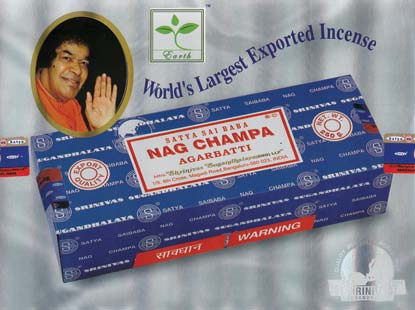

Few scents are as instantly recognisable as Nag Champa; it became the smell of meditation rooms, record shops and student flats around the world.
Origin & Traditional Use
Nag Champa is a style of Indian masala incense, made by rolling a paste of resins, herbs and floral materials onto bamboo sticks. Its name draws on the champak flower, sacred in Hindu and Buddhist devotion, and incense of this kind is burned at puja, the daily offering made before shrine images.
Uses by Tradition
Witchcraft & Folk Magick
- Meditation: light a stick before sitting and let the end of the stick mark the end of the session.
- Divination: burn while reading cards or scrying to settle the mind.
- Peace in the home: burn in the main room after a tense day, or before guests arrive.
A Simple Working
- Clear a small table and lay out your cards or scrying bowl.
- Light a white candle.
- Light a stick of Nag Champa from the candle flame and blow it out to an ember.
- Breathe slowly with the smoke for a few minutes, letting the day fall away.
- Ask your question aloud.
- Read until the stick burns out, then note what you saw.
Pairs Well With
- A white chime candle: for meditation and clarity.
- An incense holder: to catch the ash.
- Sandalwood incense: another classic temple scent.
- A tarot deck: for divination sessions.
Lore & History
Champak, Magnolia champaca, is a tree with fragrant yellow-orange flowers offered at Hindu temples and associated with several deities. Masala incense of the Nag Champa type was made widely in Bangalore, one of India’s great incense centres, and spread worldwide with the 1960s and 70s interest in Indian spirituality.
What You Receive
Nag Champa incense sticks, available in 15 g, 40 g and 100 g boxes.
Did You Know?
Classic Nag Champa sticks often feel slightly soft and tacky because of halmaddi, a resin from the Ailanthus tree used to bind and scent the paste.
| Weight | N/A |
|---|---|
| Size | 15 g, 40 g, 100 g |
Related products


