
Necronomicon oil
Price range: $3.25 through $80.25
For the seven gates and the dead · Available in 3 sizes
An anointing oil named for the Necronomicon, Lovecraft’s forbidden book and the later ritual grimoire, used for rites of the dead and Simon Necronomicon work.
Quick Uses
- Gate walking: anoint the brow and dress the candle before each of the seven gates, worked in order.
- Seals: anoint the protective amulet or seal worn during Simon-style rites.
- The dead: dress a black candle on a grave or altar of the dead, calling the dead to speak.
- Closing: anoint the doorframe once a dark rite has ended, to close the way.
How to Use It
Ceremonial & Occult Magick
- Gate walking: anoint the brow and dress the candle before each of the Simon Necronomicon’s seven gates, worked in order.
- Protective seals: anoint the protective amulet or seal worn during Simon-style rites.
Demonology & Black Magick
- Rites of the dead: dress a black candle on a grave or altar of the dead, calling the dead to speak.
- Mythos invocation: anoint the edge of a circle or sigil in chaos magick workings with Lovecraftian entities.
- Banishing after the work: anoint the doorframe once a dark rite has ended, to close the way.
A Simple Working
- On a dark moon, set a black candle and a glass of water on your altar.
- Anoint the candle with Necronomicon oil from bottom to top.
- Anoint your brow and draw a circle of salt around the altar.
- Light the candle and call on the dead you wish to reach.
- Ask your question and sit in silence, noting anything you sense.
- Thank the dead, pour the water outside, and sweep the salt out the door.
Pairs Well With
- A black candle: for rites of the dead.
- Graveyard dirt: a direct link to the dead.
- Elder Gods oil: for the protective side of Simon Necronomicon work.
- Sea salt: to circle and close the space.
What You Receive
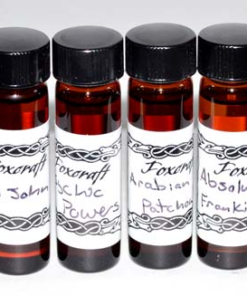
Necronomicon oil, available in 2 dram, 1 oz and 16 oz sizes.
Origin & Lore
The Necronomicon began as a fictional grimoire in H. P. Lovecraft’s stories of the 1920s and 1930s. In 1977 a book titled Necronomicon and edited by a man known only as Simon was published, presenting a ritual system built on Mesopotamian gods and demons. Necronomicon oil is a modern blend for work with the dead and with that system.
Lovecraft invented a book so dangerous that reading it drove men mad, and gave its author the name Abdul Alhazred. Within fifty years occultists were working from one.
The Necronomicon first appeared in Lovecraft’s story “The Hound”, written in 1922 and published in 1924. The Simon Necronomicon leads the reader through seven planetary gates named for Mesopotamian gods: Nanna, Nebo, Inanna, Shammash, Nergal, Marduk and Ninib. Scholars regard it as a modern composition. The oil is a modern blend.
Did You Know?
In his 1927 “History of the Necronomicon”, Lovecraft explained the title as Greek for “an image of the law of the dead”.
| Weight | N/A |
|---|---|
| Size | 2 dram, 1 oz, 16 oz |
Related products