


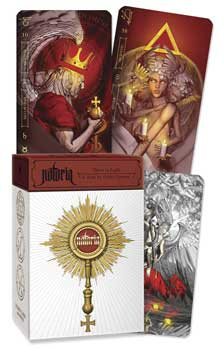
Notoria: Tarot in Light by Fabio Listrani
$31.85
Angelic Tarot of the Ars Notoria
A tarot of angels and forces of light from the Ars Notoria, the Solomonic art of knowledge, made as the bright counterpart to Goetia: Tarot in Darkness.
Quick Uses
- Angelic readings: Use the deck to read when you need the voice of the angels on a question.
- Paired with Goetia: Read alongside Goetia: Tarot in Darkness, one card from each deck, for both sides of a matter.
- Study aid: Draw a card before study or memorising ritual text, in the spirit of the Ars Notoria.
- Blessing: Stand a card on the altar during consecration rites.
How to Use It
Ceremonial & Occult Magick
- Read before Solomonic or angelic workings to see whether the hour is right.
- Use cards as meditation images while reciting prayers from the Ars Notoria.
- Lay cards at the quarters to stand for the angelic powers you call.
Demonology & Black Magick
- Pair a card from this deck with its counterpart from Goetia: Tarot in Darkness when working with a Goetic spirit and the angel said to rule it.
- Draw a card before an evocation to ask for protection, and another afterwards to read what remains.
- Use a light card to close and seal the temple after demonic work.
Witchcraft & Folk Magick
- Draw a card at the new moon for study, exams or learning a craft.
- Place a card under a white candle in a blessing for a new home or new tool.
A Simple Working
- Light a white candle and a stick of frankincense.
- Wash your hands and face in clean water.
- Say a short prayer for clarity in your own words.
- Shuffle and draw three cards: what you need to learn, what blocks you, what light to follow.
- Meditate on each angel for a few minutes.
- Let the candle burn out and keep the cards on the altar until the next day.
Pairs Well With
- Goetia: Tarot in Darkness – the dark twin of this deck.
- Frankincense – the traditional offering for angelic work.
- White chime candles – a clean light for short readings.
- Solomonic seal pendant – for protection during temple work.
What You Receive
One tarot deck with artwork by Fabio Listrani of angels and forces of light from the Ars Notoria.
Origin & Lore
Tarot moved from a Renaissance card game into occult use in eighteenth-century France, and the magickal orders of the nineteenth century tied it to the Kabbalah and to angelic and planetary powers.
The Ars Notoria is a Solomonic art of prayers and figures for gaining knowledge, memory and eloquence. It circulated in manuscript from the Middle Ages and was later gathered as the fifth part of the Lesser Key of Solomon. This deck mirrors Listrani’s Goetia: Tarot in Darkness.
Did You Know?
Thomas Aquinas condemned the ars notoria in his Summa Theologiae, judging that its figures and strange words worked through pacts with demons rather than through God.
| Weight | 1 lbs |
|---|
Related products



Altar Supplies