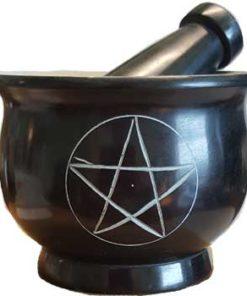
Onyx Mortar and Pestle Set (4″)
$24.15
A striated onyx mortar for grinding herbs, resins and powders
An onyx mortar and pestle, the working tool of the kitchen witch and rootworker for grinding herbs, spices and ritual ingredients.
Quick uses
- Herb work: grind herbs for powders, sachets and incense.
- Resins: crush resins for loose incense blends.
- Spell powders: blend and charge your own ritual powders.
In stock
How to Use It
Witchcraft & Folk Magick
- The mortar and pestle is one of the oldest tools of the witch, used to grind herbs, spices and other ingredients for spells.
- Grind clockwise to draw and build, anticlockwise to banish and undo, speaking your intent with every turn.
Hoodoo & Rootwork
- Rootworkers grind their own powders and blends so the work is charged from the start.
- Crush roots, herbs and minerals together for sachet powders, foot track powders and mojo fillings.
Demonology & Black Magick
- Many spirits prefer offerings and incenses made by the practitioner’s own hand, and a dedicated mortar is the place to make them.
- Grind a spirit’s incense blend while chanting its enn or name, so the powder is charged with your call before it ever touches the coal.
- Keep a separate mortar for baneful ingredients and never use it for food.
Ceremonial & Occult Magick
- Ceremonial incense recipes call for resins and herbs ground fine and mixed under the right planetary hour.
- Use the stone mortar to prepare planetary incense blends.
A Simple Working
- Choose three herbs or resins for your intent.
- Cleanse the mortar with smoke and wipe it with a clean cloth.
- Add the ingredients one by one, naming each and its purpose.
- Grind in the direction of your intent while chanting your goal.
- Pour the finished powder into a labelled jar and use it in candle or incense work.
Pairs Well With
- Dried herbs: the raw matter of spellwork.
- Resin incense: to grind into loose blends.
- Glass jars: to store finished powders.
- Charcoal discs: to burn your blends.
- Labels and journal: to record recipes.
What You Receive
One 4″ Onyx mortar and pestle set, 4″ x 3″, with striated patterns of pale tans, browns and greens that make each piece unique.
Origin & Lore
The mortar and pestle is among the oldest tools known, used for grinding grain and medicines since the Stone Age and it was a fixture of the apothecary and the cunning folk alike.
In Slavic folklore the witch Baba Yaga flies through the forest in a giant mortar, steering with the pestle and sweeping away her tracks with a broom.
Did You Know?
Much of the stone sold as onyx is actually banded calcite, often called onyx marble, prized since antiquity for its soft stripes of colour.
| Weight | 3.00 lbs |
|---|
Related products
All Herbs