


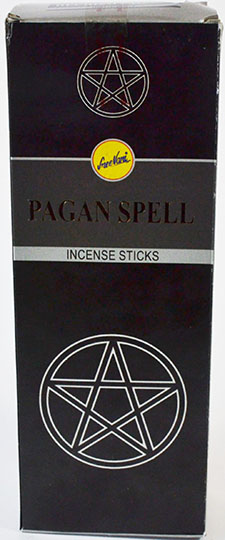
Pagan Spell incense sticks
$9.85
A spellcaster’s smoke for the circle
Hand-rolled stick incense for spellwork, lit to open a circle, carry spoken words on the smoke and close a working.
Quick Uses
- Air: set a lit stick in the east of your circle to represent Air as you call the quarters.
- Spoken spells: hold your written intention in the smoke and read it aloud as the smoke rises.
- Closing: let the last stick burn down after the circle is opened, then scatter the ash outdoors.
- Suffumigation: pass a newly made talisman, sigil or seal through the smoke to charge it.
How to Use It
Witchcraft & Folk Magick
- Element of Air: set a lit stick in the east of your circle to represent Air when you call the quarters.
- Speaking the spell: hold your written intention in the smoke and read it aloud as the smoke rises, so the words travel up with it.
- Closing: let the last stick burn down after the circle is opened, then scatter the ash outdoors to release the work.
Ceremonial & Occult Magick
- Suffumigation: as in the old grimoires, pass a newly made talisman, sigil or seal through the smoke to charge it before it is wrapped or carried.
- Invocation: burn steadily through a long invocation to give the space a consistent atmosphere from start to finish.
A Simple Working
- Draw a simple sigil for your goal on a small square of paper.
- Light a white chime candle and one stick of incense from its flame.
- Hold the sigil in the smoke and trace its lines with your finger.
- Speak your goal in one clear sentence, three times.
- Burn the sigil in the candle flame and drop it in a cast iron cauldron.
- When everything has cooled, scatter the ash on the wind.
Pairs Well With
- White chime candle: a neutral flame for any spell.
- Cast iron cauldron: for burning papers safely.
- Parchment paper: for sigils and petitions.
- Incense holder: to set the stick at the eastern quarter.
What You Receive
Pagan Spell stick incense, a box of 6 packs with 20 sticks in each (120 sticks).
Origin & Lore
This is a modern stick incense made for general spellwork rather than for a single intention. Incense has been burned alongside prayer and incantation in temples across the ancient world, and in modern witchcraft the rising smoke stands for the element of Air, which carries words and wishes outward.
Old English spell meant simply a story or a speech, and gospel is godspell, the good tale. Spoken words have always been the heart of a spell, and smoke has always been how they are sent on their way.
The Greek Magical Papyri, spell books from Roman Egypt dating roughly from the second century BCE to the fifth century CE, regularly instruct the practitioner to burn frankincense, myrrh or other aromatics while speaking an invocation. Offering smoke alongside the spoken word is one of the oldest documented patterns in Western magick.
Did You Know?
Most of the Greek Magical Papyri were bought on the antiquities market in the 1820s from a collector in Egypt known as Jean d’Anastasi, and many are thought to come from a single cache found near Thebes.
| Weight | 0.8 lbs |
|---|
Related products


