



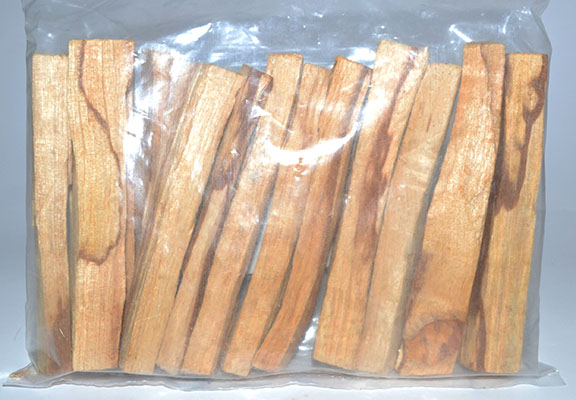
Palo Santo Smudge Sticks (100g)
$13.15
The Sweet Holy Wood
Sticks of fragrant South American palo santo, burned by practitioners who want a cleansing smoke that leaves a space feeling sweet and lifted.
Quick Uses
- Room Clearing: Light the tip, let it flame briefly, then blow it out and carry the smoke into every corner.
- Tool Blessing: Pass new tools, cards and jewellery through the smoke before their first use.
- Ancestor Offering: Let a stick smoulder on your ancestor shelf as a gift of sweet scent.
- Spell Opener: Smoke your hands and altar before any working to mark the start of sacred time.
How to Use It
Witchcraft & Folk Magick
- Walk the smoke clockwise through your home after a quarrel or a heavy visitor to settle the air.
- Smoke the inside of a witch bottle or charm bag before filling it so it begins clean.
- Burn a stick on the new moon and write one wish in the ash it leaves.
Hoodoo & Rootwork
- Smoke a mojo bag with palo santo when you feed it, alongside its usual oil or whiskey.
- Fumigate doorways and windowsills before laying a line of protective powder.
Ceremonial & Occult Magick
- Use it as a gentle suffumigation before the Lesser Banishing Ritual of the Pentagram.
- Pass talismans through the smoke at the close of their consecration to seal them.
Demonology & Black Magick
- After an evocation is closed and the spirit licensed to depart, smoke the room to clear any lingering presence.
- Smoke a spirit’s sigil before and after you work with it to keep the paper clean of stray influences.
A Simple Working
- Open a window a little so the old air has somewhere to go.
- Light one palo santo stick and let it burn for a few seconds, then blow out the flame.
- Hold a white tealight-sized candle in your other hand, unlit, while you say what you are clearing.
- Carry the smoke from the back of the home to the front door, room by room.
- Pause at each threshold and draw a small circle of smoke in the doorway.
- Light the white candle on your altar and set the stick beside it to finish smouldering.
- Sprinkle a pinch of sea salt on the front step to close the cleansing.
Pairs Well With
- White Sage: For a stronger first clearing before palo santo’s sweeter finish.
- Sea Salt: To ground and seal a freshly cleansed space.
- Abalone Shell: A natural dish to catch embers and ash.
- White Chime Candles: For short blessing rites after a cleansing.
What You Receive
A 100g bundle of palo santo smudge sticks, each about 4″ long, containing 10 to 12 sticks.
Origin & Lore
Palo santo was traditionally burned to cleanse people and places and to drive off bad spirits. It comes from Bursera graveolens, a tree of the dry forests of Ecuador, Peru and nearby lands, and its Spanish name means holy wood.
The tree belongs to the same family as frankincense and myrrh, which explains its resinous perfume. In the Andes the wood was used by curanderos in cleansing rites, and the most prized pieces come from fallen branches left to age for years before they are cut.
Did You Know?
Palo santo is a cousin of frankincense and myrrh, all members of the Burseraceae family of resin-bearing trees.
Related products


