Palo Santo Smudge Sticks & Oil (4 Pack)
$12.05
Holy wood sticks and oil for clearing, grounding and calling in good spirits
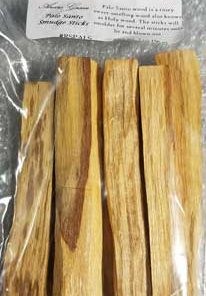
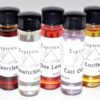
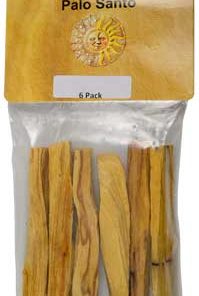
Sticks of palo santo, the “holy wood”, burned to purify a space and spirit, paired with a palo santo oil for anointing.
Quick uses
- Clearing: smoulder a stick to sweep heavy energy from a room.
- Grounding: breathe its smoke to steady yourself before ritual.
- Anointing: dress candles and tools with the oil.
In stock
How to Use It
Witchcraft & Folk Magick
- Light a stick, let it flame for a moment, then blow it out and carry the smoke through each room to clear it.
- Use the oil to anoint the corners of a doorway or altar so the cleansing lasts after the smoke fades.
Divination & Spirit Work
- Palo santo smoke is used to invite gentle, helpful spirits and to make a space welcoming for guides and ancestors.
- Smoke your cards or stones before a reading and anoint your palms with the oil to open your intuition.
Candle Magick
- Dress a white or gold candle with the oil for blessing, creative inspiration or a fresh start.
Demonology & Black Magick
- Clear the ritual chamber with palo santo before evocation and again after license to depart, so nothing lingers once the work is done.
- Anoint the edge of your circle or triangle with the oil to mark the boundary between operator and spirit.
- After cursing or banishing, smoke yourself from head to feet to separate your own energy from the current you sent.
A Simple Working
- Open a window and light the tip of a stick, letting it burn for half a minute.
- Blow out the flame and let it smoulder; the sticks smoulder for several minutes.
- Walk the room, letting the smoke reach corners and doorways, while stating your intent to clear and bless.
- Anoint your brow and the centre of your altar with the oil.
- Set the stick in a fireproof dish to finish smouldering on its own.
Pairs Well With
- Fireproof dish: to rest the smouldering stick.
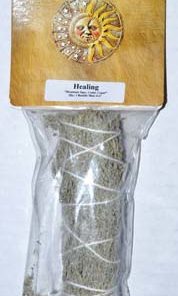
- White sage: for a stronger clearing when needed.
- White candle: to hold the blessed space.
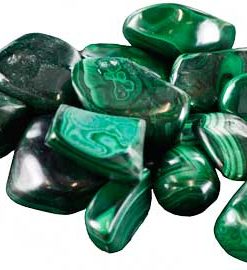
- Selenite: to keep a cleared room clear.
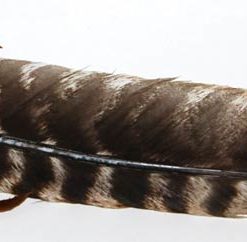
- Feather fan: to guide the smoke.
What You Receive
One pack of 4 palo santo smudge sticks with oil. Each stick is about 5″ in length.
Origin & Lore
Palo santo, Spanish for “holy wood”, comes from the Bursera graveolens tree of South America, where it has long been burned in Indigenous and mestizo cleansing rituals.
Traditional harvesters gather fallen wood and let it rest for years, as the aromatic oils are said to develop only after the tree has died naturally.
Did You Know?
Palo santo is a close relative of the trees that produce frankincense and myrrh, all belonging to the same botanical family, the Burseraceae.
| Weight | 0.20 lbs |
|---|
You may also like…
Related products