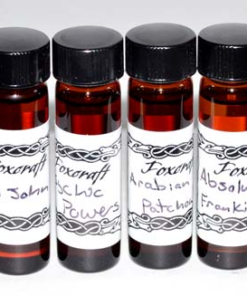
Patchouli oil with root
$10.95
Patchouli steeped with the root itself
A patchouli oil steeped with real patchouli root for grounding, divination and the love, hex and protection work patchouli is known for.
Quick Uses
- Grounding: anoint the wrists and soles of the feet after ritual or spirit work.
- Candle dressing: dress a green candle for money or a red one for desire.
- Divination: touch it to tarot cards, a pendulum or a scrying bowl before a reading.
- Hex work: dress a black candle and set it on a petition naming the target.
How to Use It
Witchcraft & Folk Magick
- Anoint the wrists and the soles of the feet for grounding after ritual or spirit work.
- Dress a green candle for money or a red one for desire.
- Touch it to tarot cards, a pendulum or a scrying bowl before divination.
Hoodoo & Rootwork
- Anoint a love or money mojo bag weekly.
- Dress candles set on petitions for love or for protection of the home.
Demonology & Black Magick
- In hex work, dress a black candle with it and set it on a petition naming the target, as patchouli’s dark, earthy reputation suits baneful work done deliberately and with full intent.
- Anoint a poppet or a doll baby used in binding or crossing work.
A Simple Working
- Before a tarot reading, set out a brown or black candle and your deck.
- Dress the candle with a few drops of the oil and light it.
- Touch a drop to your brow and to the back of your deck.
- Shuffle slowly, breathing in the scent until your thoughts settle.
- Ask your question and lay the cards.
- Record the reading, then let the candle burn down or snuff it to use again.
Pairs Well With
- Vetiver, another earthy root for money and grounding.
- Mugwort, the classic herb of divination and dreams.
- Smoky quartz, for grounding.
- Black and brown candles, for hex and earth work.
- Rose, to soften patchouli in love work.
What You Receive
Patchouli oil with root, steeped with patchouli root, in a 1 fluid oz bottle for external use.
Origin & Lore
Patchouli, Pogostemon cablin, is a bushy herb of the mint family native to tropical Asia, whose cured leaves yield one of the deepest, longest-lasting oils in perfumery. In modern witchcraft and folk magick it is linked with earth, money, love and lust, and it is also used in hex and protection rituals and in divination. This oil steeps actual patchouli root in the fragrance, so the plant itself sits in the bottle.
Patchouli smells of wet earth and old wood, and in the craft it works the same ground: roots, money, desire and the dark side of the garden.
Patchouli became famous in Europe in the nineteenth century, when Indian cashmere shawls arrived packed with its leaves to keep moths away; buyers came to expect the scent as a mark of genuine goods. It was later embraced by the counterculture of the 1960s, and in modern magick it is a key oil of earth and of the body.
Did You Know?
Patchouli became famous in 19th-century Europe because Indian shawls shipped with its leaves to deter moths, and buyers began to insist on the scent as proof the cloth was genuine.
| Weight | 0.3 lbs |
|---|
Related products