Peace Sign Pocket Stone
$4.35
A Pocket Charm for Calm
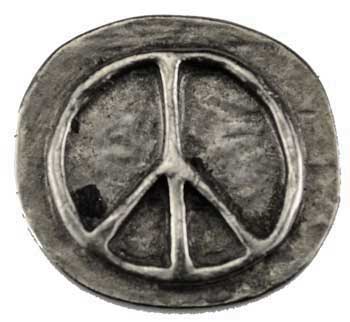
A pewter pocket stone stamped with the peace sign, held as a prayer or meditation aid when you are seeking calm and serenity.
Quick Uses
- Calm Touchstone: Rub it between your fingers when you need to slow down and settle.
- Peace Jar: Drop it into a jar of lavender and sugar to sweeten a tense household.
- Making Up: Give it to someone after a quarrel as a token of the peace you want between you.
How to Use It
Witchcraft & Folk Magick
- Bury it in a pot of lavender by the front door to keep strife from crossing in.
- Hold it through a full-moon meditation and breathe out each grudge you are ready to let go.
Hoodoo & Rootwork
- Wash it in a peace water and set it on a blue candle petition for a calm home.
- Keep it in a sugar jar with the names of quarrelling family members to sweeten them toward each other.
Ceremonial & Occult Magick
- Charge it on a Monday in the hour of the Moon, the planet of tides and moods, to steady the emotions of a home.
- Use it as a focus in a closing meditation after heavy ritual, holding it until the mind is quiet.
A Simple Working
- On a Monday evening, light a pale blue candle in the main room of your home.
- Place the peace stone in front of it on a saucer of sugar.
- Write the names of everyone in the household on a slip of paper.
- Fold the paper and set it under the saucer.
- Speak aloud the kind of peace you want in the house.
- When the candle is out, keep the stone and paper together in the room where arguments start.
Pairs Well With
- Blue Candles: The usual colour for peace and calm in candle magick.
- Lavender Buds: A gentle herb for peaceful homes.
- Peace Water: A traditional floor wash for calming a household.
- Rose Quartz: A soft stone for reconciliation.
What You Receive
One pewter pocket stone marked with a peace sign, 1″ x 5/8″. Made in the USA.
Origin & Lore
The peace sign was designed as a banner symbol for protest marches, a sign of calm and an end to conflict, and it was quickly taken up as a personal emblem of peace.
Gerald Holtom drew it in 1958 for the Campaign for Nuclear Disarmament in Britain. He combined the flag semaphore signals for N and D, for nuclear disarmament, inside a circle. It spread through the civil rights and anti-war movements of the 1960s.
Did You Know?
The peace sign was never trademarked, so anyone has always been free to use it.
Related products