



Protection & Power Reversible Smudge Stick (4″)
$5.45
Clear the Field, Then Raise the Shield
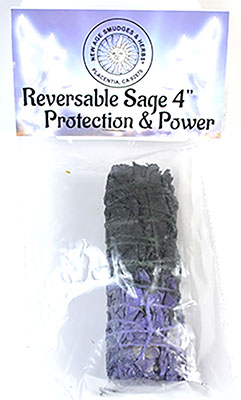
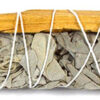
A two-toned sage bundle, black at one end and purple at the other, burned first to clear and then to ward and strengthen.
Quick Uses
- Ward Setting: Burn the black end to clear, then walk the purple end around your boundary.
- Before Spirit Work: Use both halves to prepare a temple before evocation.
- Confidence Smoke: Cense yourself with the purple end before a confrontation.
How to Use It
Witchcraft & Folk Magick
- Burn the black end to clear the circle, then trace the boundary with the purple end three times.
- Smoke your protective amulets in the purple smoke before wearing them.
Hoodoo & Rootwork
- Burn the black half to remove a crossing, then smoke the corners of each room with the purple half for a ward.
- Smoke a protection packet or mojo bag in the purple smoke.
Ceremonial & Occult Magick
- Burn the black half with the banishing ritual, then the purple half with an invocation of power.
- Smoke your wand or sword in the purple smoke before a rite of command.
Demonology & Black Magick
- Clear the temple with the black half before evocation, and cense your triangle and circle with the purple.
- Use the purple smoke to strengthen your personal seal or lamen before facing a spirit.
A Simple Working
- Set a purple chime candle beside a bowl of sea salt.
- Light the black end of the stick.
- Smoke yourself and the room, naming what you are clearing away.
- Let the burn reach the purple section.
- Light the purple candle from the stick.
- Walk the edge of the room with the purple smoke, stating that this space is guarded.
- Snuff the stick and sprinkle a pinch of salt at each doorway.
Pairs Well With
- Purple Chime Candles: For power and spiritual authority.
- Sea Salt: To seal doorways.
- Black Tourmaline: A protective stone for the home.
- Smudging Feather: To push the smoke along the boundary.
What You Receive
One 4″ dual-coloured sage smudge stick, black on one side and purple on the other, with instructions printed inside the label.
Origin & Lore
This is a modern two-stage bundle made for clearing and then warding. It borrows the structure of the double-action candle used in rootwork, where black clears and a second colour brings in what is wanted.
Purple has long been the colour of rank and authority, from the Tyrian purple dye of the ancient Mediterranean, which only the powerful could afford, to its use in modern magick for spiritual power.
Did You Know?
Tyrian purple was made from sea snails, and thousands of them were needed to dye a single garment.
Related products


